Feeds:
Posts
Comments

-Taken at Las Niñas Vineyard and Winery, Apalta, Chile, December 2009

Today’s Dietitian, a well respected magazine for nutrition professionals has a nice article on wine and health in their August issue entitled: “To Good Wine…and Better Health – The Case for Moderate Wine Consumption”

There are some great quotes from yours truly peppered throughout so give it a read to learn about what we know about how wine affects our health. The general question asked for the article is if the health benefits of drinking wine are enough for people to start drinking it regularly (and moderately). Wine producers, distributors, magazines and others in the industry will emphatically tell you “yes” without hesitation. But what does the science actually say about this? My point of view is that if you do anything for the wrong reasons you’re generally not going to get the benefits you thought you would. There is plenty of correlation with moderate wine consumption and healthy longevity in certain cultures, which could lead to direct evidence on how wine gives us a health boost when dealt with responsibly. I really do think moderate wine consumption is part of a healthy lifestyle, but let me close with a question: If you asked a rural Italian why they drink the wine that their town produces do you think they’re going to say it’s because of the health benefits?


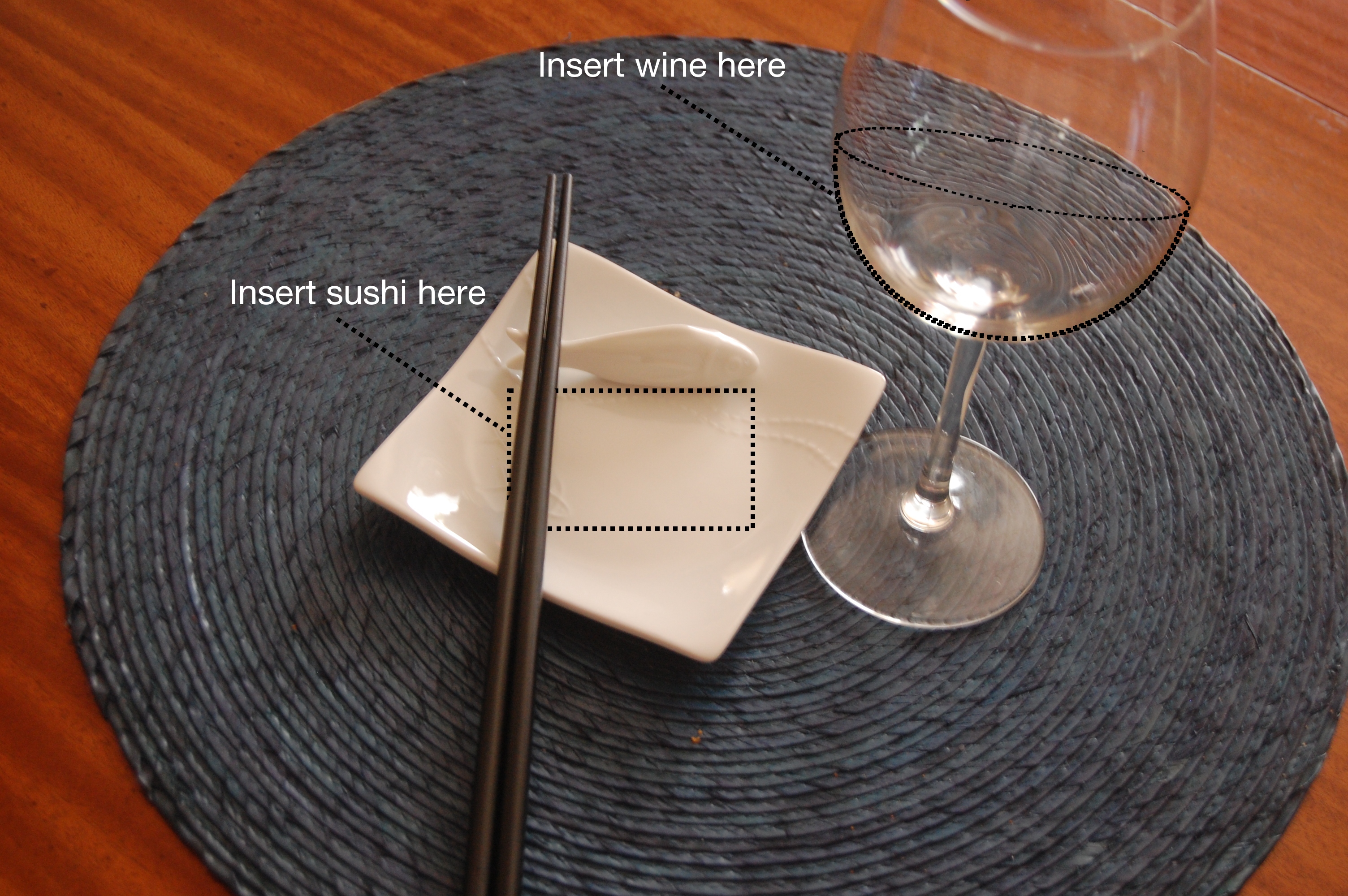
I was recently at a sushi restaurant in Chicago satisfying a seafood craving and I struck up a conversation with the owner who was tending the bar about her wine list.  It was a standard wine list, that is to say it had an equal number of reds and whites all reasonably priced and nothing too interesting.  As I sipped my dry, gin martini I inquired what wines were her big sellers.  She rattled off some of the whites which was no surprise, but then also listed some of the reds which given the reds that they were made me more disappointed than surprised.  Finally, after I reaffirmed my conclusion that people generally have no idea what wine to pair with sushi, she thew in her words of wisdom: “Drink Saké!”  Since this was followed by a free saké tasting, I wasn’t one to object.  But that conversation got the gears turning again about pairing wine with sushi.

Pairing wine and sushi can be a difficult thing.  Not because it is impossible, but because there is a lack of information.  When searching for a good wine pairing to go with just about any other type of meal, the internet is our friend.  What wine would go with this pasta dish I’m having? Google it and gather a consensus.  What meal would go with this wine I just picked up.  Google it and gather a consensus.  Yet, when it comes to pairing wine with raw fish, rice, soy sauce and wasabi, the internet, whom we thought our friend, leaves us hanging in our time of need.

Since there is a lack of information, I will be adding some data into the ether-sphere through this captivating mini-series.  This first part will summarize all of the existing knowledge on pairing wine and sushi that exists on the internet today.  The next part will get into how the food components should match or should not match the wine components and I’ll probably round the whole thing off with a good trial of pairings to verify what works and what does not.

To narrow my focus, which no one else has appeared to do, I’ll be sticking to the items and terminology that are common in a sushi restaurant found in the USA: Sashimi (Just the fish), Nigiri (Fish, rice, dab of wasabi) and those gigantic rolls that you might choke on when you put the whole thing in your mouth in one bite.  I’ll also include the condiments: wasabi, soy sauce and pickled ginger.  This is to say, I’ll be focusing on Americanized “sushi”, because let’s face it, that’s what most of us have access to and are likely to eat.

The Summary

If you were to Google “sushi wine pairings”, it might as well just return two words: Good luck. Of the little information that exists, it is mostly contradictory, based entirely on preference or not applicable to the kind of sushi restaurant you’d be eating in or that restaurant’s wine list. I won’t link to any of the articles, because all of them were vague, confusing and rarely did they actually have a conclusion.  But the general consensus is this:

  • Stick with white wines
  • Grüner Veltliner is the new kid on the block that people are raving about
  • Soy sauce destroys wine
  • Bubbly is kind of fun
  • Drink beer or saké instead
Mostly people just rehashed some form of the above “advice”, but there were a few trailblazers out there on the fringe:
  • Certain reds are great pairings if you have a tasting set up where the chef and the guy putting the tasting on specifically try to match the pairing up and come up with something that can’t be found in a standard Americanized sushi restaurant
  • Old Bordeaux is the best pairing (because all of us have some of that laying around!) per a sushi chef
  • The wine should have a touch of sweetness to it
  • Oaky Chardonnay should not be considered
  • Oaky Chardonnay should definitely be considered
My favorites [sic] were the ones that threw caution to the wind and just decided to pair the sushi with whatever wine they liked and call it a day.  The standard wine rags were non-commital at best and what was really surprising was that not even the experts would state why things did or did not work (and don’t you want to know why?).  There was debate about judiciously dabbing your soy sauce or giving your sushi a good dunking in it, a certain amount of ruckus over umami and a curiously awed stance over what kind of spiciness wasabi really is. Most of all, what floored me was that there was rarely any mention of the wine enhancing the meal as it should.  Reviews were neutral at best if any final conclusion was reached at all.

Generally with wine and food pairings you can always look to what is traditionally served together: “What grows together, goes together.”  But mid-Pacfic coast Asia doesn’t have a long tradition of grapevine growing and winemaking…so that’s out.  I’d contend that pairing wine with sushi is a new thing in the sense that it doesn’t have a long history of trial and error.  Therefore, the current lack of information on the subject is certainly forgivable.  One thing to note here is that concerning sushi, we are not pairing food with wines that are crafted to be a part of this meal.  This isn’t an impossible task as it has been done numerous times before, but it is difficult when introducing food components that don’t exist in other wine-friendly cuisines.  The intent from here on out is to analyze what makes up the sushi meal and what wine components work best (if any) in a way that will enhance the sushi experience.

Rating: 4/5

Garden salad comprised mostly of darker greens, green bell pepper, baby bella mushrooms, cucumber, tomato and a heavy dusting of chickpeas. Dash of balsamic vinegar.

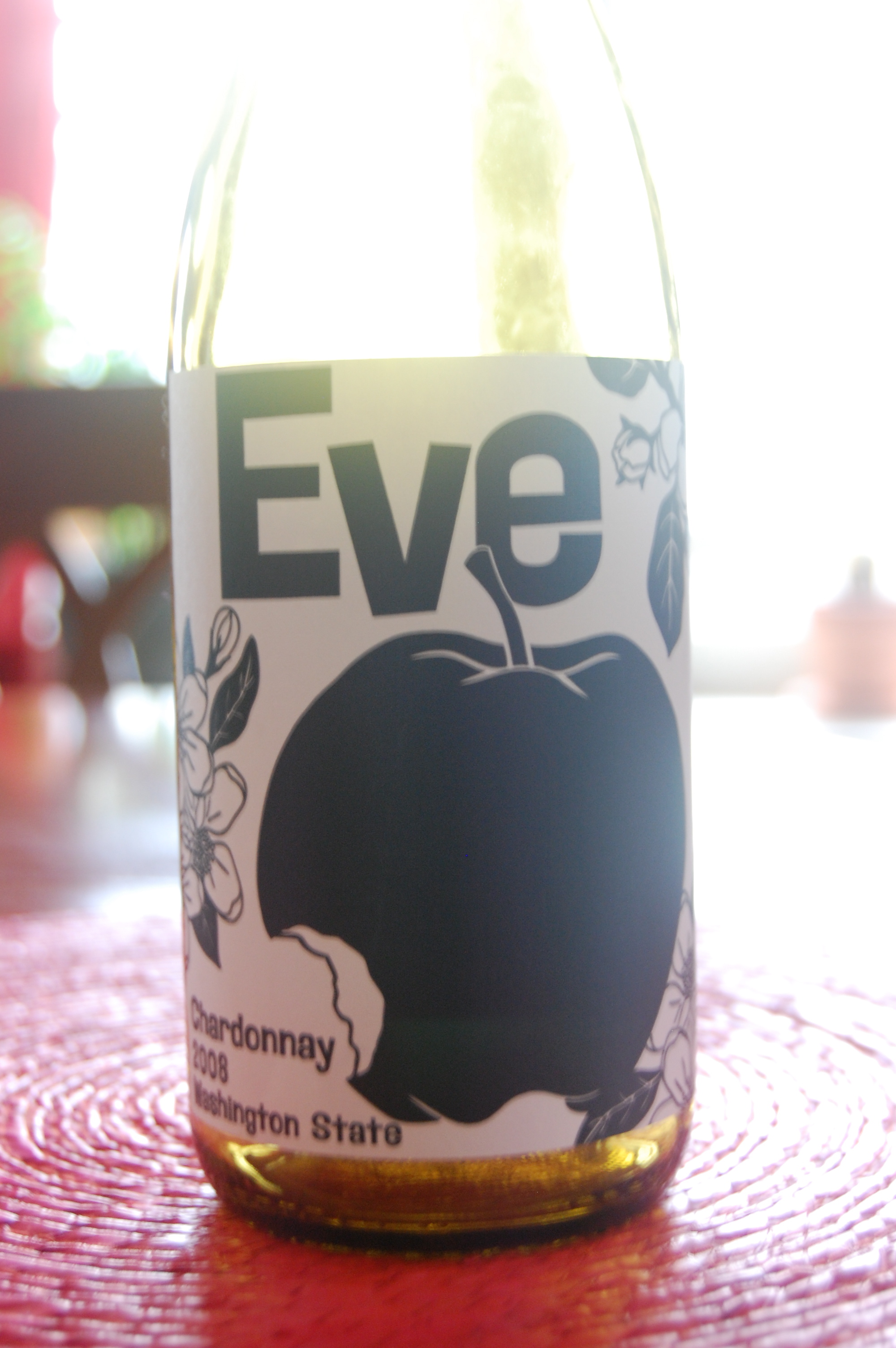
Wine: Charles Smith’s Eve Chardonnay 2008

Notes:

I’m really not trying to push Charles Smith wines here, but after the fun experience with his Boom Boom Syrah, I couldn’t just pass by this little number.  So I paired it Old Testament style with my favorite versatile and simple garden salad that clearly [sic] evokes the Garden of Eden to pick up on the apple nod from the bottle of Eve.  Let me state that the best thing about this experience was that it was a cool, crisp and clean burst at the tail-end of a scorchingly hot day  (103ºF in Minneapolis in June?  Really?).  Yes, you should pair your meals with the season and the day to some degree.

I generally tend to shy away from buttery Chards (aka: those with malolactic fermentation or MLF) that have heavy oak aging.  Instead, I lean toward a more crisp, Burgundy-style Chardonnay (Read: very limited buttery-ness or oaky-ness and yes, those are official words) and the wonderful people of the Washington wine scene seem to agree.  Eve had just a touch of butter in there, as maturing whites from Burgundy do which really brought out the chickpeas in the salad.  I tend to pile those on so highlighting my favorite part is never a bad thing. What generally prevents a salad and wine pairing from being perfect is the dressing.  Vinegar tends to react poorly with wine (more pronounced with reds) due to a chemical reaction that occurs.  I’ve found that in limited amounts, (dashes instead of dumps) the reaction’s output, a sort of pronounced sharpness, is so minimal that it really isn’t that noticeable.  What about creamy dressings, you ask?  To that I say, I’m not big on them.  While, you wouldn’t get the vinegar/wine reaction, the health benefits you could be getting from your salad sharply decline when using a creamy dressing.  If you really want a savory component in there, add a sprinkling of Feta, which also would have been a nice compliment to this salad.

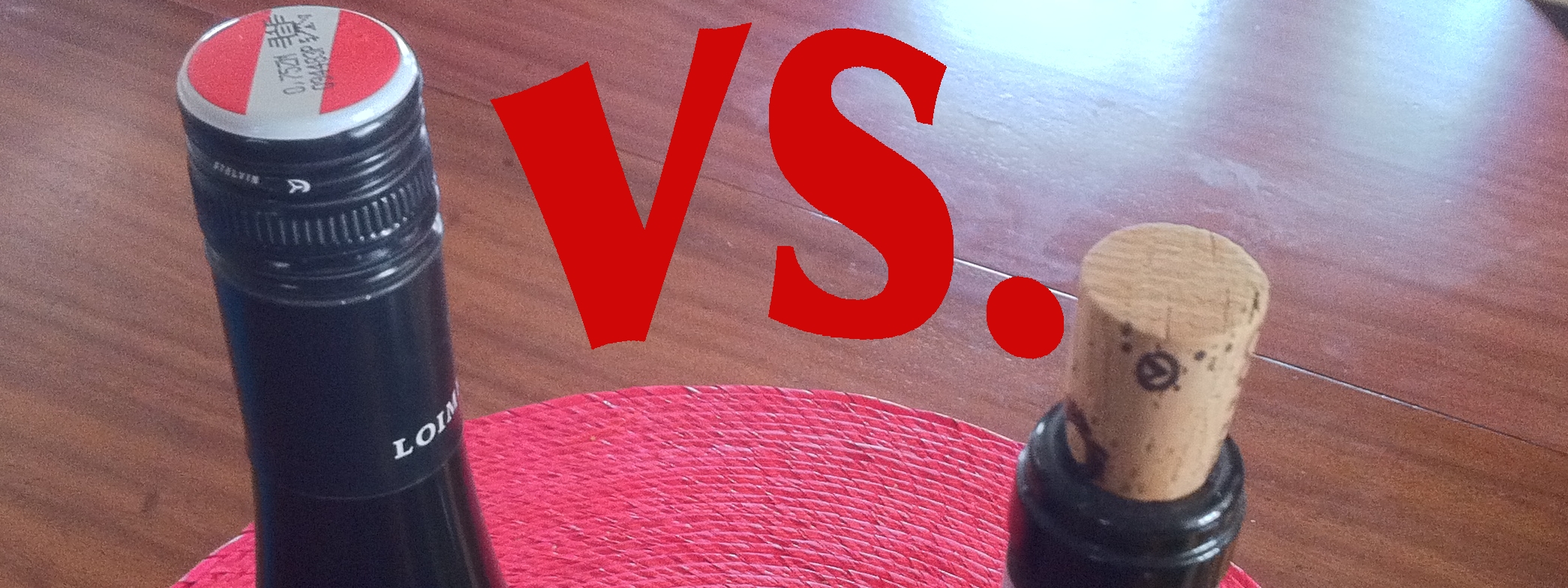
This may be one of my shortest posts, ever.  The evidence is in.  Which makes a better wine bottle closure: the screw cap or the cork?  According to Ron Jackson and his remarkable Wine Science text book, it really doesn’t matter.  Cork is used primarily because of tradition, not because it makes the wine age better or any other hullabaloo.  This has been verified by countless other people who actually spend time scientifically measuring this sort of thing.

Got it?

IT’S SCIENCE!!!!!!!

val·ue [val-yoo]

  1. a fair return or equivalent in goods, services, or money for something exchanged
  2. relative worth, utility, or importance <a good value at the price> <the value of base stealing in baseball> <had nothing of value to say>

 via Merriam-Webster

I tend do get a bit miffed when people use words incorrectly.  Not those times when it is accidentally used in passing.  That is instantly forgivable.  What isn’t is when a word is incorrectly used over and over again without the slightest notation of error.  Marketing and Advertising people tend to do it all the time, which is annoying, but can generally be ignored.  Business people do it with confidence (mostly in airports) in order to place a hot buzzword into a conversation regardless of what the conversation is about.  Industries as a whole have tended to abuse one word in particular and since this blog is about wine, I’ll focus on that industry.  That word is value.

If you ever see value wine listed on an advertisement you should translate that to what they really mean: cheap wine.  Generally, this refers to wines that sell below $10/bottle.  I suppose this came about when the industry was trying to figure out a way to make cheap wines look good to the consumer.  Undoubtedly, someone got a standing ovation at this meeting when they suggested they just switch the name to value wine.  Unfortunately, they forgot to understand semantics.

Here’s the deal: if you change the name of something that people already have a meaning for, the meaning still stays.  Have you ever seen an advertisement for so-called Luxury Apartments?  Most people mentally translate this to an apartment that’s overpriced.  Luxury means extravagant or abundant, yet if you ask someone what meaning that word has, they’ll most likely associate it with expensive.  So perhaps we should start calling all >$50 wines luxurious.

Value means that the price and the quality and your enjoyment of the wine matches the price you pay for it.  Related in semi-mathematical terms:

price = enjoyment x quality

If we want good value:

price < enjoyment x quality

And bad value:

price > enjoyment x quality

Using the real definition of value wine, does the industry’s claim make sense?  Sometimes.  When you’re dealing with lower end wines, you take a greater risk in terms of quality.  Most cheaper wines tend to be mass-produced and sourced from various locations throughout a country.  They focus on consistency in aroma and taste, not quality.  This is like comparing Ikea furniture to something that’s hand-made by a skilled carpenter.  Sometimes, you find that $6 wine where you get exactly what you’re paying for.  That’s a value.  Most of the time you just wish they’d still knock off a couple of bucks from the price because you have little to no enjoyment.

The term, value can therefore be applied to wines at any price, not just the cheap ones.  However, a true value wine is one where the price matches the quality and your enjoyment.  If you find a wine for $10, that you’d be willing to pay $15 for; that’s a good value.  If Two-Buck Chuck suddenly becomes Three-Buck Chuck, then that’s a bad value because it’s really only worth $2 .  Come to think of it, I actually value it somewhere just south of $1, which brings me to my last point:

Value is in the eye of the beholder. 

There are two fixed values in this equation.  The price, which is set by the winemaker/wholesaler/retailer and the quality which all falls on the winemaker.  The price, you can see.  The quality, you can infer by reading a good handful of expert reviews, your previous conclusion of the wine if you’ve had it before or if the wine shop is kind enough to put a solid blurb about it right there.  And then there is your future enjoyment of the wine.  Only you can decide this.  This will depend on what kinds of wines you like, what food you’re having with the wine with and how much you really care about quality.

All I ask is that you don’t let some marketing trick rope you in to only buying cheap wine.  There is absolutely nothing wrong with buying a cheaper wine if it holds value for you.  The same goes for buying an expensive bottle of wine.  Here’s a trick: Buy a bottle of Three-Buck Chuck Merlot (or another equivalently priced) and then buy a $15 bottle of Merlot from Paarl Hills, South Africa, or Walla Walla, Washington or Napa, California.  First determine if each bottle is worth the price you paid for it and then do a comparison.  Does the cheaper bottle hold a higher or lower value in your mind having had the more expensive bottle and then what do you feel about the reverse?  If you feel comfortable doing so, add in wines of the same varietal at higher and higher prices.  That will be  your basis for finding your own value wines.


Rating: 4/5

Traditional Sweet and Sour Chicken with carrots over white rice.

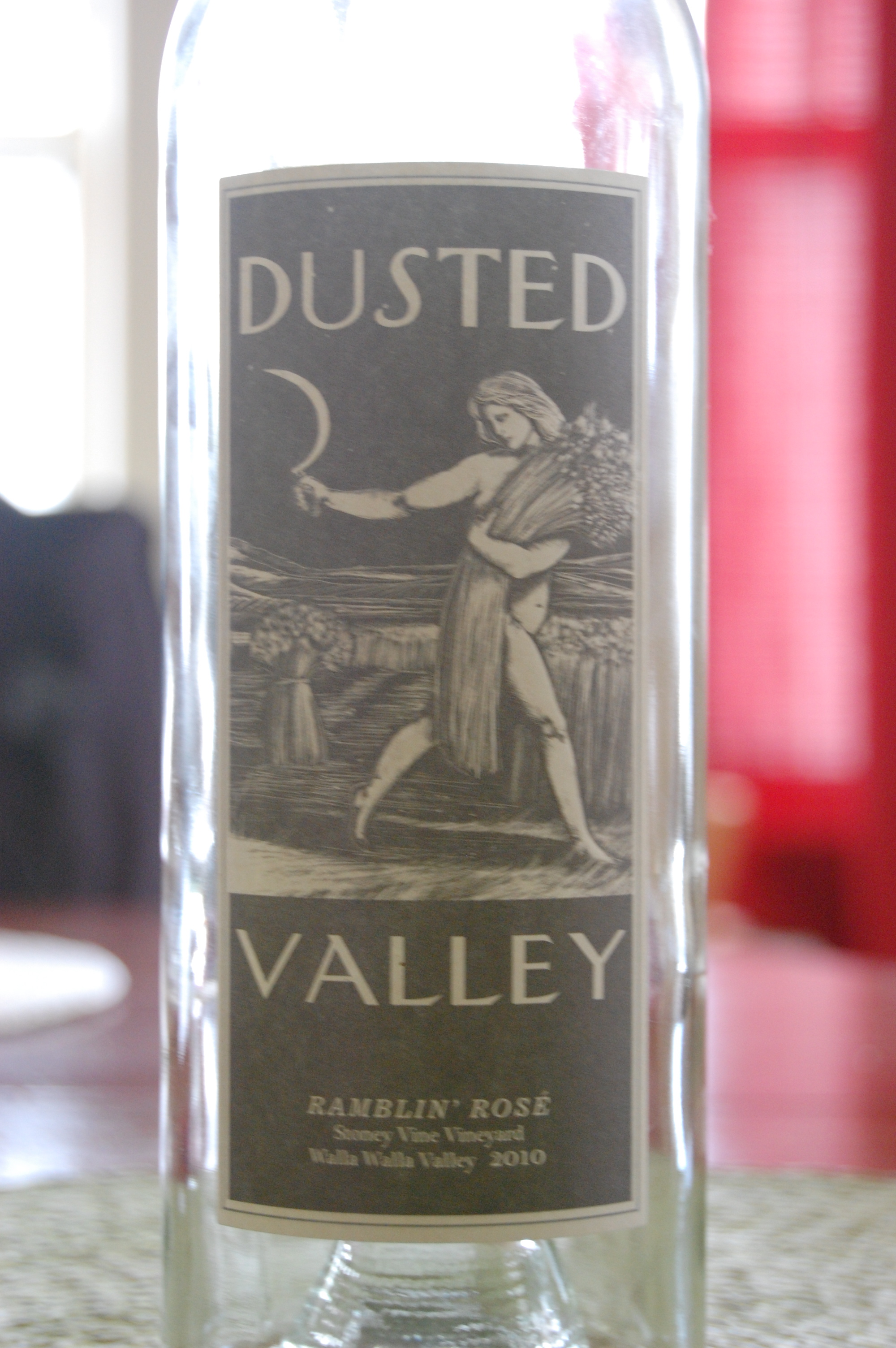
Wine: Dusted Valley Ramblin’ Rosé 2010

Notes:

What a delightful wine.  I came across this vineyard earlier in the year when they came to strut their stuff at a trade show in Minneapolis.  By far, they were my favorite Washington wine producer at the show and since I’m now a member of their Stained Tooth Society (aptly named), I’ll probably have a few more future posts pairing their wines.

This rosé, while fruit forward as just about every rosé is, doesn’t dip into the sweetness realm like so many others.  Crisp and dry, just the way I like ’em.  Its lingering finish elevates it above just a “pleasant sipper” and made me want to get some food along side it.   Some Sweet and Sour Chicken fit the bill.  The touch of cinnamon really played nicely with the fruitiness in the wine and the bit of acid along with the body of the wine held up against the food easily enough.    The only thing that could have made this better would have been to add a little more pepper in the mix.

Rating: 2/5

Shrimp bisque made from pureed rice and shrimp (no cream), green onions, shrimp broth, dash of cayenne and some other good stuff.

Wine: Sula Vineyards Chenin Blanc 2009

Notes:

Anytime you pair a decent meal with a mediocre wine, all you can hope for is that the wine doesn’t detract from the experience.  Shrimp Bisque made from pureed rice instead of cream is a nice way of lightening the bisque part of the soup up.  A Chenin Blanc would pair nicely with this if it had a bit of grassy-ness to it and a touch of minerality.  The Sula Chenin Blanc  didn’t have that.

Given that this was my first foray into the wines from India, I will withhold judgement for the entire country as a wine-producing region.  However, Nashik, where Sula Vineyards is located, sits at 20º latitude.  This is 10º off of being between the classic wine growing latitude lines of 30-50.  I can see the potential to grow wine grapes above 50º given the temperature climb over the years expanding their growing seasons, but 20º seems a little hot to me right now.  The Sula Chenin Blanc has a bit of sweetness to it and the body seems a little heavy for a Chenin Blanc. The fact that the finish started dissipating before it began didn’t help either.

Is this wine horrible? No, but it certainly didn’t add anything to the dish.  It certainly do for a summer sipper, aperitif, but then again at ~$13, you could get the same thing for a cheaper price too.

Rating: 5/5

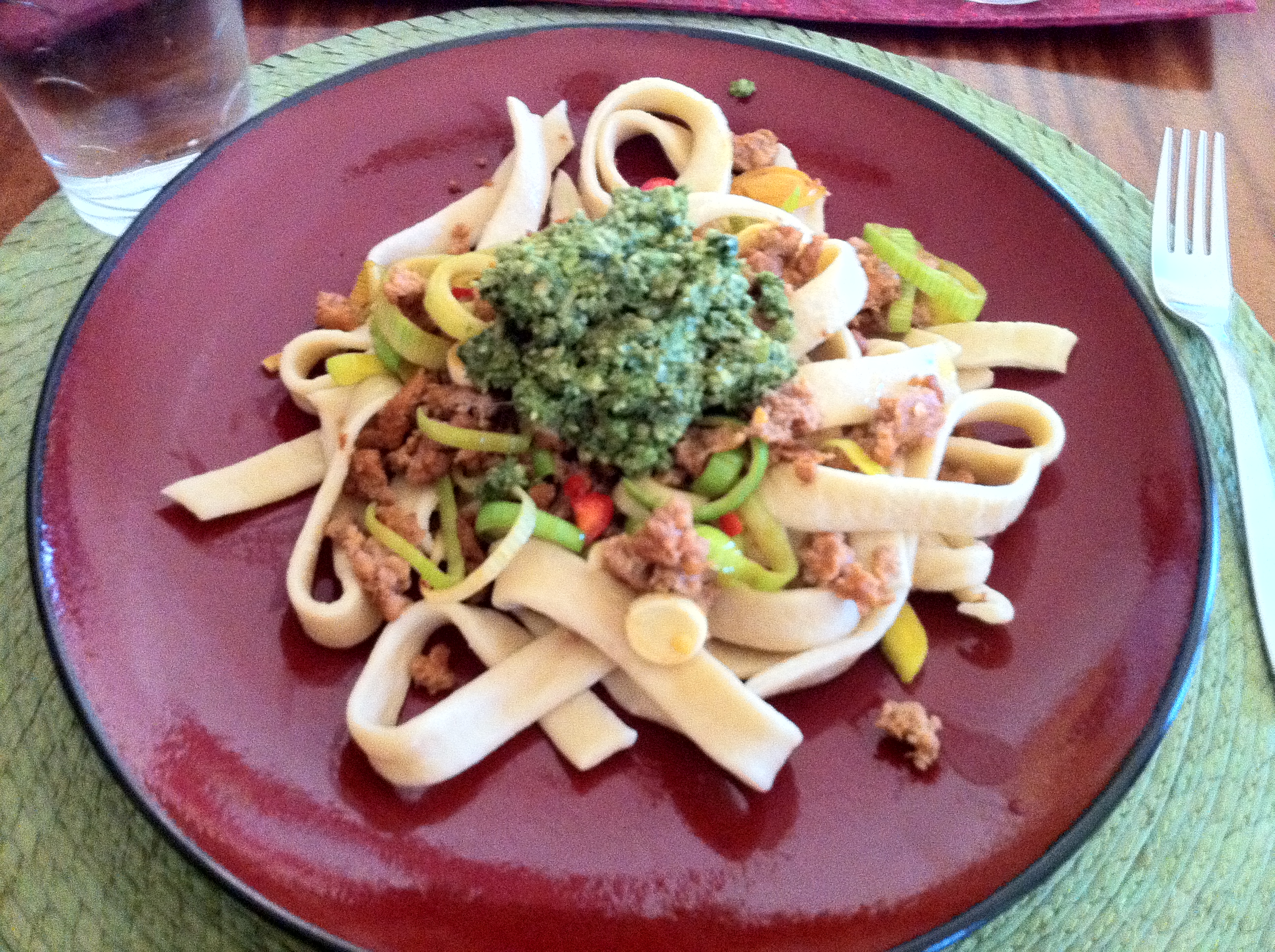
Hand ground pesto over browned turkey sausage, leeks and fresno pepper all on some homemade pasta.

Wine: Cottanera Barbazzale Bianco (Inzolia) 2008

Notes:

OK, OK…I might be slightly biased since this was the first time I’ve made pasta from scratch and it turned out to be fantastic.  I made them a bit thick because I’ve been craving a thick pasta noodle for at least a year and you can’t buy them in stores and it’s certainly rare to find in a restaurant as well.  The pesto, made with a mortar and pestle was also fantastic.  I’ve been  using walnuts instead of pine nuts and more spinach than basil recently.  Try it.  You’ll love it.

The wine was made from a grape known as Inzolia in Sicily (Ansonica in Tuscany and numerous names in other places).  It carries a bit of nuttiness in addition to being a crisp, dry white which went wonderfully with the pesto.  The finish was expansive. Always a plus.

Rating: 4/5

Slow cooked chicken in a solid blend of herbs and spices, along with Risotto made from Arborio, milk, butter, olive oil with a dash of white truffle, cardamom, honey, pepper and white wine.  Side salad included.

Wine: King Estate’s Acrobat Pinot Gris 2009

Notes:

I’m somewhat convinced that this wine could go with just about anything reasonable. It is true to any decent Pinot Grigio/Pinot Gris in that respects.  The thing that made this pairing a little above average was the touch of honey and cardamom in the Risotto and the bit of sweetness it brought out in the finish of the wine.   Great meal for the start of Spring!

Rating: 5/5

Halibut, pan-heated then baked with dill, cracked pepper and sea salt.  Sided with wasabi sour cream, a red pepper vinaigrette and dill and paprika spiked couscous.

Wine: Loimer Grüner Veltliner “Kamptal” 2006

Notes:

To get this out of the way up front, this pairing was amazingly fantastic! But on to other important issues, like what is that thing on the logo?

I’m completely vexed by this thing and couldn’t stop staring at it all the way through dinner.  An inquiry has been sent to the folks in Austria because this is a “need to know” item.  I’ll update the post as soon as I get a response.  Back to the pairing though: Grüner Veltliner, known as “GruV” over in Austria where it is top dog is one of the few wines I’ve found that work great with spicy asian foods (thai, sushi, etc.).  It’d probably work pretty well with some Indian food now that I think of it.  However, for this meal the fantastic acid in this wine cut through the spice of the wasabi sour cream (just mix wasabi paste into sour cream and stand back) and the spicy red pepper vinaigrette.  The body of the wine perfectly stands up to the dish. With flavors of green apples, lemon peel and some great minerality every bit of this dish was complimented.  I even got every element of the dish into my mouth with the wine at the same time to fully appreciate this. A big nod goes to this wine’s wonderful balance.  I need to go get another bottle or 6.

UPDATE: Straight from Birgit Loimer, that bad boy on the label is in fact a fertility god.  Hopefully, they don’t have troubles selling this wine to the people of Alabama like some wines do.