October 15, 2010 by aaronberdofe
Very exciting day! I just picked up a delivery of 6 bottles from Yoakim Bridge Winery out in Sonoma. This was one of my favorite vineyards on Dry Creek Road. These two wanted to start a small vineyard that produced great wine and they did it. For those of you not in the know, Dry Creek Road is one of the “wine roads” in Sonoma that leads from Healdsburg, CA to Lake Sonoma. If you want some fantastic Zinfandel, try it from Sonoma. My preference leans towards the stuff coming out of the Dry Creek Valley, but I may be biased since I haven’t been to the others yet.
Great quote from the winemaker after he took my info for their wine club: “OK, well I’m going to go back into the field now.” That’s how I like it!
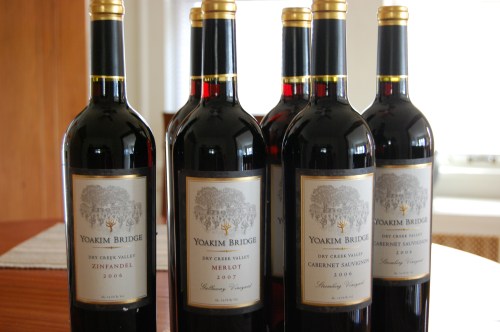
2 bottles of Merlot
2 bottles of Cabernet Sauvignon
2 bottles of Zinfandel (of course!)
Beautiful labels too. Pairings will come in due time. May be a couple of years if I can wait that long for the Cabernet.
Posted in Vineyards/Wineries | Tagged cabernet sauvignon, merlot, yoakim, zinfandel | Leave a Comment »
October 3, 2010 by aaronberdofe
Rating: 5/5
1/2 Chicken rubbed with pepper, rosemary, salt and some leftover Chinese Plum Sauce I had from a wine and food pairing event the night before. Side of mashed sweet potatoes with nutmeg and cinnamon and sauteed kale with garlic, lemon juice and ginger.
Wine: Elk Cove Pinot Noir Rosé 2009
 Notes:
Hello, autumn. After hearing raves multiple times from a woman who checks me out at the wine shop on this wine, I decided to give it a go. Why not? I haven’t actually had a Rosé all year anyway. Shame on me, right? So I finally did. Just when summer was over. Paired with the chicken, sweet potatoes and kale, this was a magnificent lunch for two. The wine has these light floral, strawberry and watermelon characteristics, but with a solid body and structure behind it that mixed wonderfully with the fall flavors in the food. Perfect seasonal segue meal. Roasted chicken always looks beautiful as well so I included a picture of the full meal this time.

Posted in Rose | Tagged chicken, elk cove, kale, pinot noir, plum sauce, rose, sweet potatoes | Leave a Comment »
September 15, 2010 by aaronberdofe
Finally did some research into the “legs” or “tears” that appear on the insides of your glass of wine. I had been educated enough to know that these had no marking on the quality of the wine and had something to do with the body of the wine, but not much beyond that. So what are they all about?
Evaporation
The alcohol in wine evaporates at a faster rate than the water. It also has a lower surface tension. So I don’t get too Geeky, the simple explanation is that beads are building up on the sides of the glass as evaporation occurs and then they fall when gravity takes over to cause the “leg” or “tear” to fall down the glass. I find they are best looked at when there’s a flickering candle on the other side of the glass.
In terms of quality, the percentage of alcohol in the wine is noted (i.e. 13.5%), but more importantly it’s balance to the remaining factors of the wine (acidity, tannin, etc.). However, because the “legs” are created due to the processes of evaporation and gravity there is no way to relate the visual information with the gustatory or olfactory information you are about to receive.
Posted in Education, Fun Facts | 2 Comments »
July 31, 2010 by aaronberdofe
Rating: 3/5
Scrambled egg sandwich on two pieces of whole wheat toast. Dash of hot sauce on the eggs. Use butter.
Wine: Mark West Pinot Noir 2008
 Notes:
Yes. I just went there. Now, there’s nothing wrong with Mark West Pinot Noir (or an egg sandwich for dinner for that matter). It’s a good representation of northern California Pinot Noir. However, trying to pair an interesting dish with the MWPN is kind of like bringing your Toyota Corolla to the red carpet of a movie premier. You have to keep it simple. More than simple. As if the stars had aligned, I simultaneously happened to have an opened bottle of MWPN and next to nothing in my refrigerator besides eggs on the same night. A peculiar laziness had also asserted itself over me and thus, the pairing. If you’re ever in a pinch, do the same with a similar Pinot Noir. It works. It really works.
I would never try this with an aged Pinot Noir. The tannin found naturally in the varietal can take on the fats in the butter creating a rather smooth experience. I used my typical dozen shakes of Frank’s hot sauce. If the hot sauce tastes too much like vinegar it’ll interfere with the tannins and you’ll get a bad taste in your mouth. There were touches of that happening in my mouth, probably due to my excessive need for hot sauce, but not enough to get in the way.
Posted in Pinot Noir | Tagged Eggs, Mark West, pinot noir, Sandwich | Leave a Comment »
July 31, 2010 by aaronberdofe
Rating: 5/5
Pulled roasted chicken, chicken sausage, potatoes, leeks, onions and green peppers in a homemade chicken broth spiced with sage, rosemary and vegetables. If you want, add some flour to thicken up the soup (I didn’t, but it was summer). Add plenty of pepper to the soup and a hunk of your favorite bread. Voilá. Country Chicken Soup. Hungarian style.
Wine: Szepsy Tokaji Hárslevelü 2005
 Notes:
I really should have saved this pairing for the fall and I was told specifically to hold on to this bottle for at least 5 years, maybe 10, but I’m impatient when it comes to these things. Excellent pairing. This Hungarian white has enough earthiness and minerality in it to have with a hearty soup.
Posted in Tokaji | Tagged chicken, Harselevu, Hungarian, Potatoes, Soup, Tokaji, Vegetables | Leave a Comment »
July 22, 2010 by aaronberdofe
I’ve done a few wine and food pairings lately, mostly with people who are just getting in to wine or didn’t even know the world of wine had any depth to it. The entire experience is centered around educating the participants about how to taste wine, what quality wine is and why it does or does not work with certain foods. I start with the noble varieties (Chardonnay, Sauvignon Blanc, Riesling, Pinot Noir, Merlot, Cabernet Sauvignon) and pair them with some fairly common foods so people can get an idea of why you pair one wine with one food, but not another.
When I was in Chile I noticed that everyone down there drank Cab Sauv with everything! Ceviche on the menu? Have some Cab Sauv with that! It is the most produced wine grape in Chile and thus the highest amount of local consumption, but a lot of Chileans might benefit from something outside of a single grape every once in awhile.
Here is the Tasting Menu I use for my beginners wine and food sessions. If you’re in the Minneapolis area and would like to organize something like this for you and your friends, let me know!
Posted in Education | Tagged cabernet sauvignon, chardonnay, menu, merlot, pinot noir, riesling, sauvignon blanc | Leave a Comment »
June 7, 2010 by aaronberdofe
Rating: 5/5
Slow cooked pork in a raspberry barbecue sauce shredded and put on a ciabatta bun with some Muenster. Cornbread and green beans on the side.
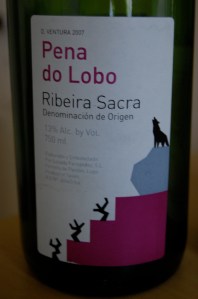
Wine: Pena do Lobo 2007
Notes:
What a perfect summer meal. The red fruits in the Mencía really set off the fresh raspberries I used in the barbecue sauce.
Posted in Mencia | Tagged barbecue, Mencia, pork | Leave a Comment »
June 7, 2010 by aaronberdofe
Rating: 2/5
Baked rainbow trout with fresh ginger, garlic and cayenne.
Sautéed Chard.
Risotto with dried Porcini mushrooms hydrated in white port and water.
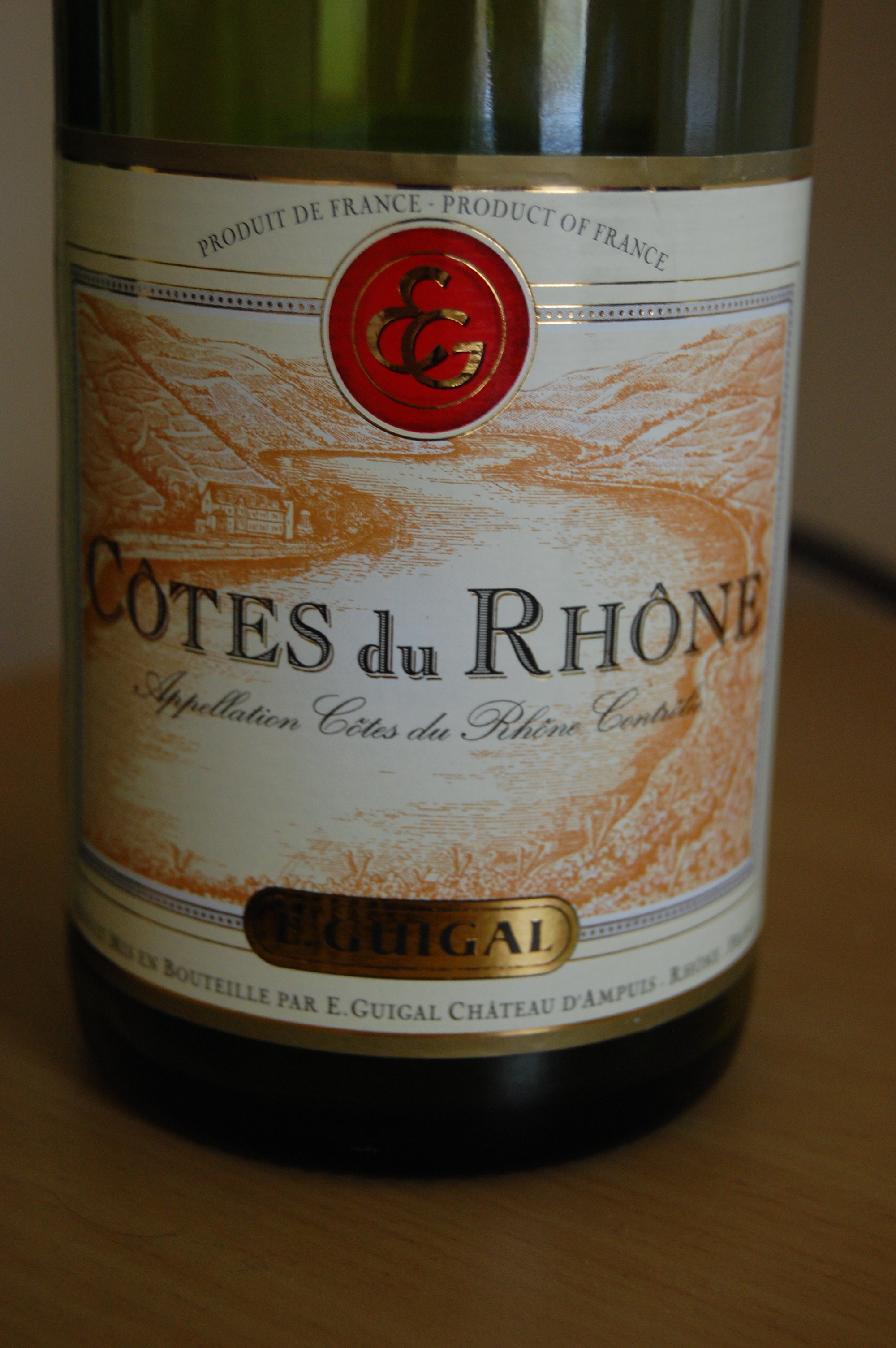
Wine: E. Guigal Cotes du Rhône 2006

Notes:
Talk about a heavy dish! Although the Syrah is wonderfully earthy and definitely took on this meal. It was just too heavy overall to have more than a few bites. Next time, the mushrooms should be left to soak in water or perhaps use some bellas.
Posted in Syrah/Shiraz | Tagged Chard, Risotto, Syrah/Shiraz, Trout | Leave a Comment »
April 28, 2010 by aaronberdofe

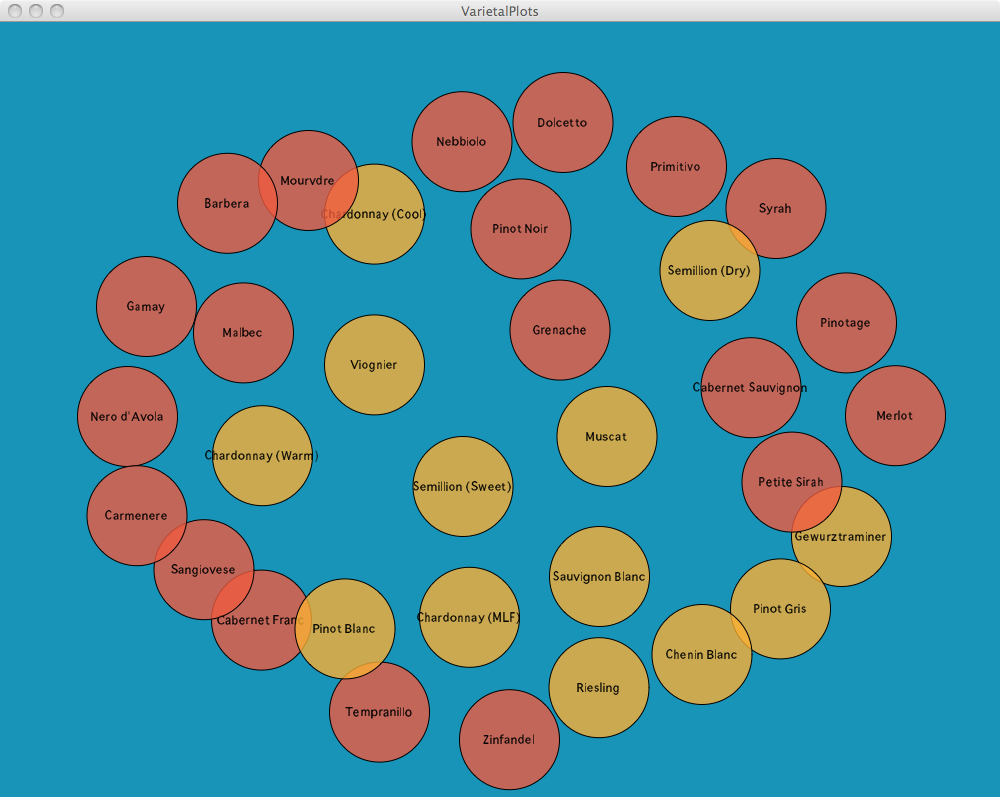
Above is a comparison of the aroma and flavor characteristics of some common varietals. The closer one varietal is to another, the more they share common descriptors. Do note, that these are only aroma (bouquet too!) and flavor descriptors. Mouthfeel was not included at all. So really it’s a comparison of the aromatic compounds in each varietal. In order to analyze the data I had to have some sort of common identifier so there are two non-aroma or flavor characteristics that were used: Red/White and the species of grape (Vinifera).
I took the common descriptors for each of the above varietals from Wine.com and placed them into a comparison matrix. My justification for using them as a source is that they have a massive database to pull from and therefore can be pretty accurate. However, they neglected Chardonnay and Pinot Noir for some reason. I based the common descriptors for those off of my own knowledge and comparing against numerous sources. Chardonnay was broken down in to those from warm climates, from cool climates and those with Malolactic Fermentation (MLF) since they really do have their own characteristics.
The matrix with the varietals was then analyzed using SPSS to create a similarity matrix which calculates the “distance” between each varietal based on how many common characteristics they share. This matrix was then taken and analyzed with Multidimensional Scaling (PROXSCAL), again in SPSS, to come up with coordinate points based on their distances so I could plot them. I took these plots and created a visualization program using Processing to generate the image.
Posted in Research | Leave a Comment »
April 28, 2010 by aaronberdofe
Rating: 4/5
Paella made with sun-dried tomato chicken sausage, scallops, shrimp, mixed peppers, chili beans, white rice, garlic, mushrooms and fresh sage.
Wine: Pétalos Bierzo 2006

Notes:
Paella happens to be one of my favorite dishes of all time. The peppers I use generally change from time to time and if I add beans, they’re usually just red and not chili. However, it’s hard to mess Paella up and the pepper mix of cayenne and serrano pulled in a good deal of heat. The fresh sage was a first time addition and definitely a keeper since it provided a wonderful refreshment in the middle of the dish. Generally, I’ll pair this with a Tempranillo or Monastrell, but the Bierzo (grape: Mencía) was something new so I opted for it. Bierzo is complex as it sifts between something like a Tempranillo in the leather and tannin and then towards something fruitier with it’s red fruits with hints of minerality and herbs. It packs a punch though. The mouthfeel on this was like a semi flowing through your mouth. Oddly, this made a great pairing with a spicy dish that probably would have prompted sweat without its aid.
Posted in Bierzo, Mencia, Spanish | Tagged beans, bierzo, chicken, garlic, Mencia, mushrooms, paella, peppers, rice, sage, Scallops, shrimp | Leave a Comment »
« Newer Posts - Older Posts »



 Aaron Berdofe's Wine and Food Experience
