Feeds:
Posts
Comments

I’m interrupting my regularly scheduled programming on wine and food to bring you this message on whiskey and whiskey.  Because people ask me about that too.

photo (1)

For those that have traveled in or around Iowa (Why? I don’t know) in the recent decade and enjoy drinking whiskey, you may have heard of Templeton Rye.  The town of Templeton, located in Central Western Iowa apparently got tired of those boring cash crops and decided to make some whiskey based on so much rye.  Naturally this was back in the Prohibition days and reputedly was the favorite brown drink of Al Capone.  Then again, I could be Al Capone for all the internet knows.  Regardless, the common consensus is that it is a tasty rye whiskey.

However, a few years ago, the folks at TR had a bit of a [good] problem on their hands.  The stuff would fly off the few shelves it was stocked on in Iowa the second they were stocked.  And of course, you don’t deny someone their whiskey needs.  It’s un-American.  Therefore, TR, a bit strapped on space, resources, and most likely general know-how on how to massively scale up their production decided to outsource it to Chicago (Most likely because Al Capone once hung out there too).   Therein lies the rub for a lot of TR fans.  Now, it’s pretty much everywhere.  No longer is it cool to say you picked up a bottle of TR.

There’s just one little catch.  The distillery in Templeton is still producing* their original recipe in their original way, while the folks in Chicago are using the original recipe in some way that makes more whiskey.  No need to get technical about that one since you’re probably having a glass of TR right now.  Therefore, you can still be cool if you pick up one of the bottles that is actually bottled in Templeton.  But those still go fast.  Tell me how I’m supposed to know which bottle is which, Aaron!!!!  Turn the bottle around.
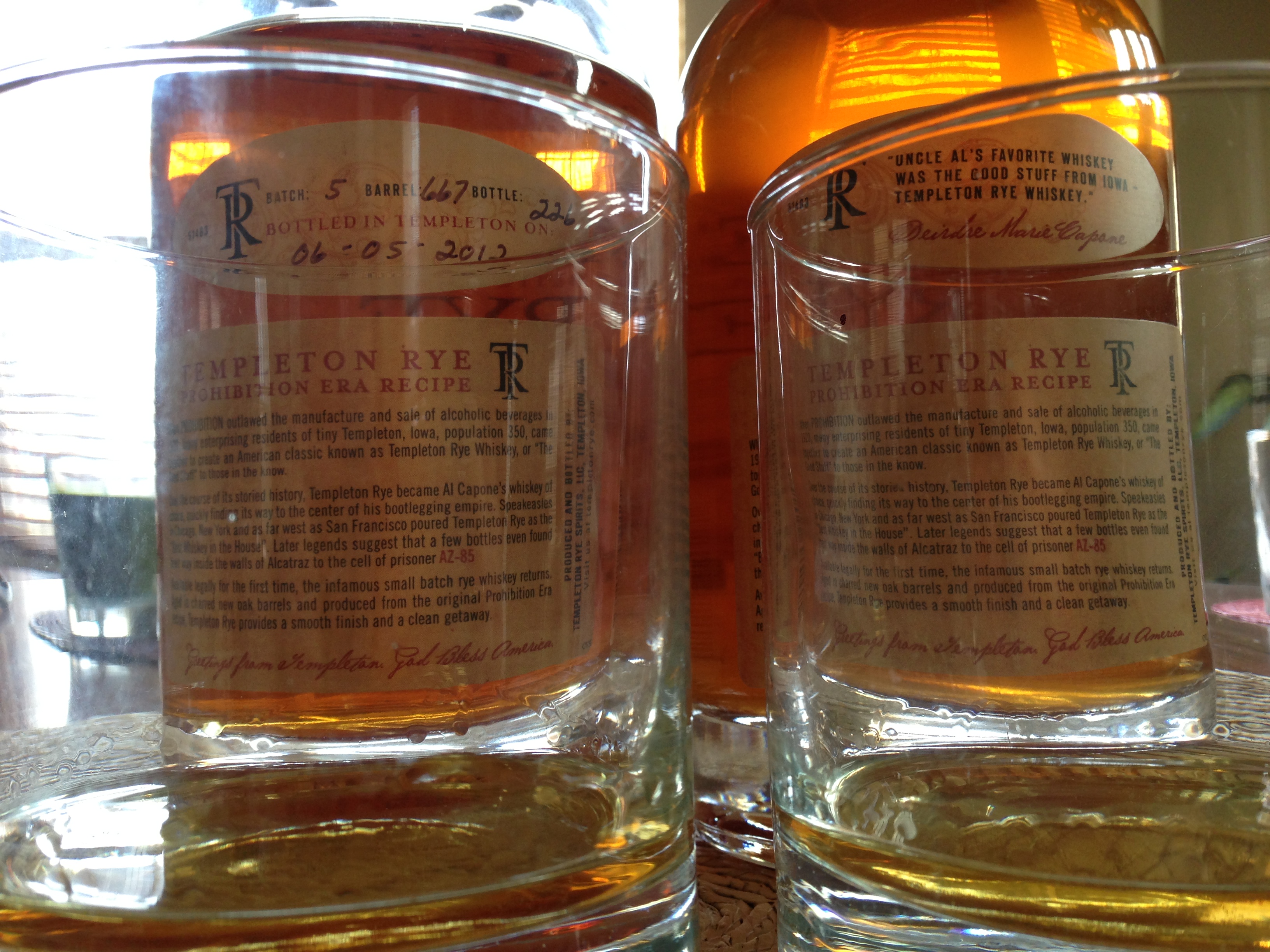
Handwriting means it was handcrafted.  Everything else is made by hand-less workers.

Handwriting means it was handcrafted. Everything else is made by hand-less workers.

The question is, do they taste different?  Well of course I’m going to answer that question for you.  I spent nearly an hour figuring it out because I care.  Obviously, it wasn’t a blind tasting, because I had no one around to pour it for me this afternoon and my pet monkey is much too lazy, but I can guarantee my professionalism during the experiment (not the monkey’s). As seen in the above picture, the glass to my left held the rye bottled in Templeton which was procured for me by a dear friend that has been wrestling other whiskey-fueled patrons to get “The Good Stuff” annually for the past few years to give to me on my birthday; the right was the outsourced bottle.  The difference between the two after much considerable attention to the matter was absolutely nothing.  Appearance, nose, palate; all the same.  Admittedly, the Chicago bred version had just a twinge more bite to it to begin, but that was most likely because I had just uncorked the bottle whereas the other had been opened previously.  The bite will mostly likely diminish slightly in the future as it is wont to do.

In concluding remarks, I should impress upon you that if you are merely interested in trying TR, either option should do just fine.  However, if you would like your friends to talk about how “In-the-Know” you are behind your back, go with the bottle that has the handwriting on it.  I personally just like the added detail of information displaying batch/barrel/bottle/bottle date on it to make me feel better about myself, but you are free to try to fake your own back label if you want and then sell it on eBay.

*A friend of mine reminded me that TR has outsourced the actual distilling from the beginning to a distiller in Lawrenceburg, IN and has merely bottled it in Iowa since it opened.  If you want to see which sweet old lady from Templeton, IA hand labeled your bottle, check out the video on their website.

Are you one of these guys? No? Then you can't sing Auld Lang Syne while drunk no matter what you say.

Are you one of these guys? No? Then you can’t sing Auld Lang Syne while drunk no matter what you say.

Alright,  here it is; the only sparkling wine advice you’ll need for New Year’s Eve. It’s all about the science of bubbles!!!  Science Friday, one of my favorite podcasts had chemist Richard Zare on to discuss the persnickety peculiarities of bubbly beverages.  Despite the overly-liberal use of the brand name “Champagne” (Remember all Champagnes are sparkling white wines, but not all sparkling white wines are Champagne.) this was a fantastic episode with numerous tidbits that you can use to tantalize your NYE cohorts.  Take special note of Ira’s suggestion of a pickup line.

Oh, and what sparkling wine should you get this year?  Apparently, sparkling red wines are trendy right now (Gamay, Pinot Noir, and blends mostly).  So there you have it.  I just knew something trendy.

Enjoy this and have a wonderful end to your 2012: The year the world didn’t end. Again.

SciFri: Get the Most Bang From Your Bubbly

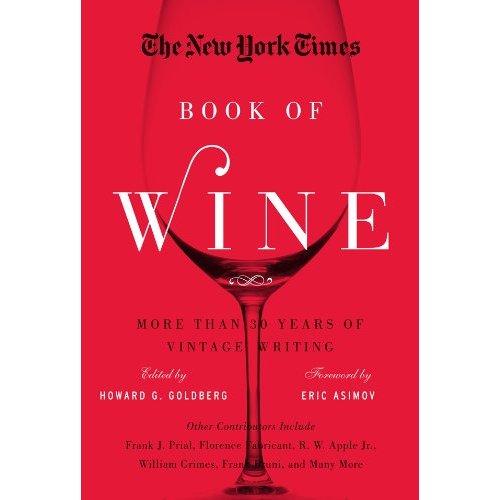
The NYT's Book of Wine: A ReviewThis may come as a surprise, but I generally don’t read wine-related books aimed at wine drinkers.  I find most of these are filled with irrelevant wine trivia (which may or may not be accurate), current wine trends, descriptions of lavish/unattainable experiences in exotic locations, and occasionally a collection of “rules” that are based upon the author’s wine preferences and not those of the reader.  So it was with some hesitation that I picked up the New York Times’ Book of Wine, which released earlier this year, on a whim.

I don’t think I have to tell you that this blog is not mainstream by any means, and if you asked me what wines are “hot” right now I most certainly would not be able to give you an answer.  Looking at one of my bookshelves right now I have two wine sciences books, one of which is an actual text book and a how-to guide on setting up your own vineyard.  Not exactly the readings of a guy who knows what’s hip and cool with the kids these days. And that’s why I picked up the book; It’s a collection of the NYT’s wine articles over the past 3 decades. What better way to see what the wine trends have been for the last 30 years and to actually figure out what’s been “hot” in the trendy wine world?

Burgundy. So hot right now. Burgundy.

Burgundy. So hot right now. Burgundy.

At around 550 pages, this behemoth of a collection was a heavy companion as I took it on my hectic travel schedule through the end of fall.  In my mission to extract the flow of wine trends over the past 30 years, it did not fail.  Unfortunately though, the majority of articles were focused on the very topics I listed above which have driven me to avoid reading wine magazines and op-eds.  So despite having to sift through descriptions of obscene opulence during dinner parties in mansions only accessible by boat and pronunciations that  this bottle of wine that has only been tasted by 10 people is the best one ever (Because really, who are you to say it’s not? You’ll never be able to try it.), I did in fact glean some interesting tidbits from the collection.

  1. The NYTimes has not so much been trying to shape and guide the conversation about wine in America over the past few decades. Instead, it had the conversation, it’s telling you about it, and you shouldn’t question their conclusions because you’ll never have the money to experience what they did. Fortunately, I believe Eric Asimov, their newest head wine writer is changing that.
  2. The idea of drinking Wine as a “cocktail” (without food they are meaning, not that it is a mixed drink), is a concept uniquely American.  And even though they just barely hinted at it in the articles, perhaps this is why Americans are generally accepting of wines with more and more alcohol in them which we don’t usually consider to be food-friendly.
  3. Locally grown and made New York state wine would probably be as little known nationally as Minnesota wine is if it weren’t for having the New York Times nearby.
  4. In wine writing, high price has always trumped any other factor in determining whether one will enjoy an experience with food and wine or not.
  5. It’s good to be a wine writer for the NYT.
  6. Wine vintages used to matter a whole darn lot, but have been slowly leaking out of the conversation about wine.
  7. The wine world will lambaste anything new, but is really quite accepting of new techniques and methods after they produce good wine.
  8. France, France, France, Italy, Spain, France…Napa! France apparently maintains the gold, silver, and bronze standards of wine culture according to wine writers who constantly ask themselves WWFD?
  9. Robert M. Parker Jr. sets prices with his 100-point scale for the wine industry.  Little is known what will happen when he’s no longer around which may be soon as current rumblings suggest.
  10. The American wine drinker has evolved from the subset of rich Franco-philes  (which believe me, still exist; I’ve had dinner with them) to a large swath of the upper-middle-class.  While wine in Europe may be enjoyed by the working class and nobility alike, there is still a class division in beverage choices in America.
  11. Eric Asimov has been the only wine writer for the NYT to actually ask questions at the industry.  This is a much welcome change from a reader perspective and something I try to do in my own writing.  Whether it is to confirm traditions or to usurp prejudices, questions should always be asked.  Not only does this shake up the stodgy feeling of wine writing and bring it “to the masses” if you will, but Eric’s article entitled “Can Sips at Home Prevent Binges?” is a fantastic jumping point to a conversation about wine’s effect on our society.  In the article he debated whether or not to give his kids sips of wine at dinner in hopes to not only instill in them a love of wine, but show them how it is properly used (to enhance a meal) and to teach them that it shouldn’t be abused or used as a crutch to relieve stress.  What a wonderful conversation to have in a society where underage binge-drinking and alcoholism are a problem!

So despite me having to grumble through some more-than-poetic descriptors of wines and events 99.9% of people in this world will never experience, I have hope in wine writing.  It’s moving from descriptions of high society to a conversation about wine’s role in society, albeit with some resistance.  So while I generally focus on how you, the individual are interacting with and experiencing wine, I might start to look more at how groups interact with and experience it.  But after it all, your guess is as good as  mine as to what’s hot right now in the wine world.  According to Google Trends the most common search term accompanying the word “wine” is “red”  so….there you go.  Red wine is where its at right now.  Use that insider tip to impress your friends and don’t forget to tell ’em where you got it!

[Insert glass of red wine here to be trendy]

[Insert glass of red wine here to be trendy]

Rating: 5/5 (Yeah, yeah, they’re all just wonderful, aren’t they?)

Spaghetti squash tossed in grape seed oil, topped with lentils, tomatoes, and spinach.

Wine: Birichino Malvasia Bianca 2010

Image

Notes:  So what makes this near-vegan? I cooked the lentils in some delicious broth made from the Thanksgiving turkey (sorry!).  Technically, this was also a gluten-free meal too, so there you go health trend people and celiac sufferers.  Feast away.  For the uninitiated, spaghetti squash is an actual squash that when cooked can be stripped with a fork to create strands that look like spaghetti.  I’d take it over store-bought spaghetti noodles any day.  What this dish was lacking was a fresh bit of citrus and a dose of floral.  Fortunately, the wine brought those to the party with its supple body, perfect alcohol content for food (13%!), and fortunate dry finish in tow.  This wine would most likely be beautiful with any squash based dish and for those who still need to bite into a dead animal at every meal this one works with some sausage (spicy or not) right on top.

photo-5Readers of this blog will note that I adhere to a strict non-point-scale-giving, non-arbitrary-ranking-system policy.  There is a simple reason for this: No regular person drinking wine is going to have an experience epiphany while manually tallying up observational points.  Who gives a shit?  I will point out the things that stand out in the experience of a wine though to help people find the words to describe what made it enjoyable or not.  However, wine critiquing is something that needs to exist for any crafted product to help set prices and to establish an inherent and generalizable definition of value in the industry.

Therefore, I would be doing you, the reader, a disservice if I didn’t actually know how to critique wine.  Fortunately for me (and you), I do.  I follow a close version to what is taught in the International Sommelier Guild which is where I received some of my training.  In order to demonstrate the steps for reviewing wine, I will be using the Gewürztraminer that I made  the other month which is now strangely disappearing quickly every time friends and family are around.

Appearance

  • Clarity: Is the wine free of cloudiness, crystals, or other floaty things that you’d rather not see in there?  This is relating to how well the wine was filtered and fined.  However, it should be noted that the appearance of crystals (a result of a slip-up in cold stabilization) doesn’t affect the taste or smell.  It should also be noted that some red wines are in fact, unfiltered.  When tannin starts to bind and fall in the wine over time, it settles to the bottom.  This is not a fault. Decanting will take care of this if you don’t like to have debris at the bottom of your glass, but some of us like this guy, do.
  • Color: What color is the wine?  You’ll find “yellow” or “red” doesn’t cut it with the professional crowd or color freaks.  You have to say some shade of “Straw” to gold for a white generally and a variation on ruby or garnet for reds.  Really you’re just trying to determine if the wine is the correct shade of color for the varietal.  If it’s brown, then something is wrong.
  • Color depth and brilliance:  How deep is the shade of color and how much does it shine?  Most wine critiques prefer wines that are rich in color and have a certain shiny characteristic (not unlike dog toys).  If you process a wine too much while fining and filtering, you’ll probably take away some of the luster.   The depth or purity of the color is really a preference though.  Some claim it’s an indicator of overall grape quality, but that’s not commonly recognized.
  • Color pooling:  How much does the color of the wine pool to the center? or is there a pale rim of color around the edge where the wine meets the glass?  This is an indicator of wine maturity (not necessarily age).  It’s not that the more color pools to the center, the better the wine is, it is more of an indicator as to how far along a wine is in its life.

Appearance of my wine:  Clear, deep in pale straw color, no pooling.

Nose

Pictured: perfect form

I have a big nose. I get it.

  • Health:  Does the wine smell healthy?  If the wine smells funky then there’s probably something wrong with it.  This could be a bacterial infestation (Mmmmm), general hygiene problems (usually also relating to bacteria), or way too much sulphur (smelling like farts).
  • Intensity:  How much do you have to work to smell the wine? I range this between getting knocked over the head with smell down to needing to dig your nose in the glass to get the faintest whiff.  A lot of critiques seem to like to be hit over the head.
  • Aroma/bouquet:  What are you smelling?  There is a lot of debate between the difference of aroma and bouquet so you’ll see them used interchangeably.  The best definition I have heard is that aromas are the compounds that are inherent in the grapes and bouquet are the compounds that come about during the wine making process.  So if you don’t know what the difference is this one might take a little work, but I can guarantee you that most critiques don’t know either.  The easy way out is just to list what you smell.  Then you verify that the wine you are smelling smells like what it is.  For example, a common Chardonnay aroma from cooler climate areas is Green Apple.  Does your Chardonnay have a Green Apple smell to it?  It should also be noted that humans can only distinguish between 4 different aromatic compounds at a time.  If someone is telling you more, you can call BS.

Nose of my wine: Healthy, mild intensity, aromas of peaches and lemons.

Palate

Marginally unrelated image.

Marginally unrelated image.

  • Sweetness:  How much residual sugar is residing in the wine?  This ranges from sweet down to dry (with an addition of “brut” for sparklers).  Despite what most think, the vast majority of wine produced resides in the dry and off-dry category.  The measure of actual sugar in the wine should not be confused with the perception of sweetness that is mostly caused by…
  • Acidity:  How much saliva rushes into your mouth after sipping the wine?  If you ever hear someone call a wine “flabby”, they are stating that the acid of the wine is much too low to balance out the wine.  As a general rule, the colder the climate, the  more acid is in a wine.  Therefore, if you like high acid Rieslings, don’t expect to like one from central California.
  • Viscosity:  How heavy does the wine feel in your mouth?  Is it vapid and wraith-like or does it have the characteristics of an iron fist wrapped in sweet sweet velvet?  You’ll see this referred to as “Body” a lot, but I find that term is a bit vague for my taste.

Plus we aren’t supposed to sexualize wine descriptions anymore. STAY BACK SEXY PURPLE-ISH PINK WOMAN!!

  • Alcohol:  How much alcohol is in the wine?  Yes, trained tasters can identify the alcohol content of a wine just by tasting it; usually within 0.5%.  Try me.
  • Sound wave:  I’m pretty sure no one else does this, but I can feel how the wine floats through my mouth and visualize it like the shape of a sound wave.  Does it peak early and fizzle out?  Does it crescendo into infinity?  I love this description because I think if every bottle of wine only showed the sound wave and maybe a few aroma descriptors, wine buyers would have zero risk in picking up a wine and knowing if they liked it or not.
  • Tannin:  That cotton-wrapped feeling your tongue endures when drinking some red wines, coffee, or tea.  Tannins bind to your saliva proteins which causes the dry feeling. Anything aged in oak will have tannin and anything which stays in contact with the grape solids for a while (reds) will some degree of tannin as well.  The amount of tannin should be appropriate for the varietal and the style.  The heavier the red, the more tannin it generally has.  The longer it is supposed to have been in oak, the more tannin is imparted into the wine as well.
  • Flavors:  Similar to the aroma/bouquet of the nose.  Do they also appear on your tongue or are they different.  Same reasoning too.
  • Complexity:  How much depth does the wine have?  Or how long does it make you think about what’s in it?
  • Balance:  Do all of these factors balance together or does one stick out to some degree?  Just in case there was any doubt: A balanced wine is a better wine.
  • Finish:  After you swallow or spit (which is acceptable when tasting, but for some reason the ladies seem to think that’s hilarious) how long does the wine linger with you?  Does it quickly dissipate or does it stick around?  The length of finish can generally be tied to the level of quality of the wine.

Palate of my wine: Off-dry, with fresh-acidity, silky viscosity, around 12% alcohol, a sound wave with an even fade-in and fade-out reaching a moderate height, fairly simple in complexity, but well balance and a lingering finish.

So all-in-all my wine turned out to be pretty decent considering I was expecting it to taste no better than something that came out of jug.  If I were going to put this wine out on the market, I could probably get $12-13 for a bottle at retail.  Not bad for a first attempt.

Making Your Own Wine


The best wine is made in…the garage?

Do you ever wonder how many wine critics and writers have actually made wine? I’m not talking about a lifetime of wine making before putting up their wine thieves and turning to writing and criticizing, but just making a batch of homemade wine.  The answer, as you can probably assume, is well under 5% of professional wine writers and critics.  Admittedly, I have not done a complete survey of those in the trade and I can most certainly find exceptions, but recently I picked up the New York Times’ anthology of their wine articles over the past 30 years (more on that in the future) and it has left me with some lingering doubts.  I make this accusation, not from a high horse of self-serving sanctimony, as I myself had never embarked upon a wine making journey until recently, but from a self-disciplined critique of my own limited body of knowledge.   How can one, after all, make comment on a final product, without truly experiencing how it is made?

This is much like “Tech Writers” making critique on the latest iPhone model and its lack of ability to direct them to the correct Starbucks.  Their own electronics manufacturing and software development experience may never have exceeded cleaning the dark colored grit off of their mouse every few weeks, but still they comment.  The title of my wee little blog has been The Wine and Food Experience for a reason. Is experience not the best educator?

One may have noticed that I don’t do any critiquing of wines here.  Sure, I poke fun at wines that are made specifically to cost a certain amount, but I don’t have a 100 point scale and I never, ever review a wine for the sake of reviewing a wine.  I’m focused on my singular experience with a wine and usually its accompaniment with food.  However, I realized in my semi-professional career as a Wine Guy (official title) that I may be asked to judge wine at some point where my opinion would actually have an impact on people who produce the stuff.  Needless to say, I couldn’t tell someone they didn’t de-gas their wine enough which led to an unpleasant prickling on my tongue as I sipped when I haven’t de-gassed a wine myself, now could I?  Shameless.

So a few weeks ago I headed to Northern Brewer , a nationally renown retailer of home brewing equipment and picked up all the goodies for making some wine.  I had just started a full bathroom remodel on an off week from traveling and I figured why not add something else to the plate?  I settled for making an off-dry Gewürztraminer because I wanted some latitude with the amount of finesse needed and most importantly, it was the cheapest option. No, I didn’t crush my own grapes, I just bought a “wine kit” which comes with the juice in concentrated form, the additives, and the yeast.  Amazingly convenient!

Now, wine making is not overly difficult by any means.  People have been doing it for thousands of years with fewer of the tools available than I picked up in 5 minutes of shopping.  But to do it well, takes care.  For you, I have compiled some general lessons from the field of small-batch wine making that transfer into your experience.  I’ll be giving out bottles as soon as it’s bottled, so some of you may get early Christmas presents!

Guess what’s going in your stocking?

Clean, clean, clean, clean, clean, clean, clean.  It is so easy to get things dirty when you’re making wine.  Dropping things into cloudy juice and needing to fish them out, for example.  Taking samples, the transferring, the pouring, the mixing; every step is a disaster area waiting to happen.  If you’ve ever had a sense of dirtiness when you are tasting wine, you’re witnessing a slip in hygiene.  I’m not talking about the “Sitting in a rustic barn, with faint wisps of manure” dirtiness, I’m talking about the “Something just died in my mouth” dirtiness.  This is why most wineries put custodial duties at the top of their priority list.

The right tools, however few, are essential.  Northern Brewers basic wine kit was missing a few things in my opinion: A wine thief (the thing you see people dipping into barrels to take out wine samples), a thermometer, pH testing strips, and a drill-mounted mixing tool.

A note on additives.  Wine is held in high esteem by a large number of people because making it is generally a reductive process.  Some people also get very high and mighty about this.  In its purest form, the winemaker merely shepards the grapes from their round form into an alcoholic beverage.  This is called Natural winemaking.  They use the yeast that comes naturally on the grapes, no sulphur , no nothin’.  99% of winemakers want their wine to last more than a few months in the bottle and therefore at least add a singular additive of Sulphur. These same winemakers also choose to inoculate their wine juice with chosen yeast strands instead of the natural yeast.  Of course, there are a whole host of things that can be added and done to the wine that aren’t necessarily in that “pure” realm.  Here’s the list of acceptable additives for wine in the U.S. and the list of acceptable processes.  If you’d prefer to drink your wine without an edge of disgust, you should probably avoid clicking on those links.  BUT, additives do actually serve a purpose.  The ensure that fermentation happens, they make the wine clear and not cloudy, they smooth out the flavor, etc. and so forth.  So if you absolutely demand consistent wine, that’s perfectly clear at a cheap price, it’s best not to get worked up about additives.  For my endeavor I added Yeast to convert sugar to alcohol, Bentonite for stabilization before fermentation, Metabisulphite for preservation, Sorbate to control foaming, and Isinglass for clarity.  Now most of these small amounts of additives latch on to particles in the wine and drag them to the bottom which are left in the bottom of the tanks before being bottled, so wine can still claim to be a reductive process.


Being from Minneapolis, I have to be somewhat of a Hipster.  We are the Hipster capitol of whatever, as you know.  I’m not the glasses, flannel, and skinny jeans type; no (that’s so passé), but it is certainly not beneath me to state that something that has now become popular is suddenly uncool.  That something is the wine and cheese pairing party trend.  The mid-2000s called; they want their snobby party idea back.

Like most things I oppose, this one is mostly on principal.  I won’t belittle it because it gathers people together to quaff large quantities of wine while enjoying cheese on the side and a feeling of “fanciness” in the air.  No,  I fully support people who enjoy that sort of thing taking part in that.  It is the fact that the event is a complete sham and people are only maintaining the illusion that they are learning something about wine that I just won’t stand for.  And since I won’t call it out when some guy is talking about how amazing his wine and cheese parties are at a wedding reception and it’s “Just something [he] likes to do”, which apparently makes him a “Wine Guy”; I will do it here.   I’m so passive-aggressive.

So let me lay it out for you: why you should step it up a notch at your next wine-inspired event.  Don’t worry, I’m not going to crack down on the Kraft cheese.  That isn’t the issue.  I’m not even going to crack down on the casual appearance of Two Buck Chuck: still not the problem.  The problem is food science.

Cheese is composed of fat, protein. and salt.  That’s all of it.  The balance of which will cause you to define it as a creamy cheese (i.e. Brie), a salty one (i.e. Aged Cheddar) or something in between (i.e. Gouda).  Plastic-y is something else entirely.  Hopefully, you read the results of my rebelliousness previously and will at least pick up that salt has a certain affect on red wine.  Fats and proteins have long been paired with red wines because they bind with the tannins, thus reducing the cotton-mouth feeling you get from them.  Salt, as previously reported, has a similar effect, and also reduces bitterness.  If you add a couple grains of kosher salt to your coffee, you’ll get a similar smoothing as adding cream.  In fact, milk is still an acceptable additive in numerous parts of the world to ease the bitterness and astringency on overly tannic red wines.

Then there’s acid.  Acid in wine can help lighten up a heavy dish by “cutting through” some of the fat.  A dash of vinegar or citrus in a heavy cream sauce or soup can turn a dish from bland and heavy to focused and structured.  Voilá.  Thus, higher acid in wine cuts through heavy and creamy cheeses.

So here are the two experiences you’ll ever notice at a wine and cheese party. First, when you have a creamy or salty cheese with a red wine, you are masking the tannins or “softening” them in wine lingo and left with the fruit of the wine.  This generally encourages those who aren’t too fond of tannins to drink more red wine.  Then, if you pair an acidic wine with a creamy cheese, you’ll be ok with eating more of that cheese.  At the end of the night, you’re primary experience will be, “Wow, I ate a lot of cheese and drank a lot of wine.”  You will have spent most the evening masking certain items of either cheese or wine.  This is like erasing the horrible lead guitarist in the band and not replacing them with anyone better.

Wine and food pairing, much like a good band is about balance.  Everything has to play a part to create a more complex and enduring experience.  As someone who plays music solo a lot, I can tell you that I crave, crave, crave a full band sometimes to make it more interesting for the listener.  Do you want to listen to a drum solo the rest of your life? I didn’t think so.

When I’m doing a wine and food pairing event, I admit I’ll occasionally have a cheese and chocolate course at the end with a tannic red.  But it’s to show the specific effect the elements of cheese have on tannins in red wine. That’s a drum solo within a song.  Rock on!

Therefore, if you truly want to make the night an interesting experience over and over again, you have to change the mix of interactions between the wine and the food.  There are five different basic tastes you can play around with.  Have something sweet, salty, sour, bitter, and savory (umami) and then see what happens with each of those and the chosen wines.  You will learn something, I guarantee it.  From then on, you can taste a food or wine and ask yourself what you think is missing or what more you are craving to make that sensation balanced.

This self-impression of balance is what is being referred to when someone says,”This pairing did/did not work for me.”  But only by getting beyond wine and cheese events will you be able to answer the most important part to that, which is why.  There’s certainly a time for having a little wine and cheese as a snack, because sometimes simplicity and comfort are what we are craving, but that one note solo is not going to make for an entertaining evening again and again.

As a side note, if you really want to seem cool at these parties, use my music metaphor and tell people you need a little more of the bass line on a certain pairing trial and they’ll be astounded.

Superfluous Rating: 5/5

Salmon fillet seasoned with salt, pink peppercorns and rosemary; topped with butter and lemon and thrust into an aluminum packet and put on the grill.  Red potatoes, leeks, onions, mushrooms, and asparagus seasoned with salt, pepper, and rosemary; loved with a butter and olive oil mix, piled into an aluminum packet and put on the grill.

Wine: Rudera de Tradisie Chenin Blanc 2009

Those of you with a keen eye will note a different windowed back drop. Cheers to buying a house and turning it into your own wine palace.

Notes:

There’s nothing like a cold snap during the tail end of September to remind Minnesotans that winter will be coming soon.  Nevertheless, I will be using the grill until there is a foot of snow on it; and perhaps then I might even make that the first destination when creating snow paths.  The best part of putting all your food in to tin foil or aluminum (pronounced Al-lu-MINI-um if you’re British) is that there is barely any cleanup and you can still let the food simmer in tasty juices.  And this salmon, with potatoes and veggies on the side is delightful after that.  I believe the internet people say, “Nom.”

I don’t think I’ve seen salmon popularly paired with Chenin Blanc, which is all fine and good, but this was fantastic.  This particular C-Blanc (its rapper name) from Stellenbosch, South Africa was wonderfully floral and had a bit of creaminess to it because it was fermented in oak.  Not a common process for C-Blanc, but it worked out fine to give it quite a bit of body and really turned this into a cool autumn comfort meal.

Drinking Too Much Wine

20120908-081954.jpg

Some friends are evil. They’ll pull at your heart strings, luring you into their cabin of evilness with ideas like: “Let’s go up north for the weekend (It’s something Minnesotans do constantly) and you pick out all the wine!”. This is both a brilliant idea, because you are guaranteed to get some really good wine, but a dangerous idea because you will also get a lot of wine and you will really feel obligated to drink it all. Perhaps this will be after a stop at a bar where one of you knows the owner and who simply will not let you leave without too many drinks on the house. Things happen in the Northland. It is the Vegas of the Midwest after all without all the glitz and well, the Las Vegasy stuff or the heat. Therefore, as my own version of a PSA, in order to save people from some tragic endings in the future, I have compiled a list of revelations that you should take note of.

Your Headache Is From Too Much Alcohol. Nothing Else.
I can’t tell you how many people have come up to me after a class and ask me how to prevent headaches from drinking wine. “I only had two glasses. I swear! It’s only after drinking wine that I get them.” Yeah, but that bottle of whiskey you had before the wine counts too, so don’t blame the wine. Here’s the only solution: Drink equal amounts of water and don’t drink too much. That’s it. It’s not the kind of wine. It’s not the sulfites in the wine. There are more sulfites in a small box of raisins than in your glass of wine so if you don’t have a reaction after consuming raisins, you aren’t allergic to sulfites. Read The Science of Wine, or Wine Science (basically any book with “Wine” and “Science” in the title) before you feel like debating me. If you currently have a headache and are reading this though, you probably don’t believe any of that so go ahead and blame whatever you feel like. Blame me if you’d like. I am the harbinger god of headaches. Happy?

If The Reverse-Thrusters Kick In, You Will Never Drink That Wine Again.
I’ve made mistakes in my youth. I’m not ashamed to say it. One was having waaaaay to much of a low-end wine which we’ll call Tiny Emu that may or may not have resulted in a noise violation at an apartment complex. Now, after seeing Tiny Emu going the wrong way out of my mouth, I will never look at Tiny Emu again. In this case, my wine acumen has developed to the point where Tiny Emu isn’t even an option, but many of you buy the same cheap wines over and over again. So there’s my warning. Wine puke.

20120908-083939.jpg

Bacon Sandwiches Are Your Friends The Next Morning
The British are known for a few things including habits of imperialism, dry senses of humor, and being hungover constantly. Therefore, they put some scientists on the important question of what cures a hangover. The answer they found was bacon sandwiches. Fortunately, this coincides with what a lot of young gentlemen Brits have in their ice boxes (they still call them that, right?). The carbohydrates are there to kick-start the metabolism to help you process everything faster and the protein breaks down into make-you-feel-better amino acids. It’s really best not to question theses things. Especially delicious things.

20120908-080600.jpg

Playing Drinking Games With Wine Does Not Make It Classy
First off, always sip and swish your wine no matter what. Chew your drink, drink your food as the old saying goes. This should remain true if a deck of playing cards come out and you’ve found yourself in a death-match of wits where wine is your poison. 20120908-080708.jpg
Look, I’m all for classing things up. My wine and food pairing experience is a classy alternative to the typical tawdry bachelorette party for example (and I’ve had numerous highly satisfied customers!), but replacing inferior beverages with wine does not make one classy. A wine-o perhaps, but I’m classy because of my other attributes and my wine drinking factor just happens to look good next to them. While sipping and swishing is certainly a better alternative to chugging, let’s be honest. It’s a drinking game and will most likely end in tears.
20120908-080941.jpg

Drunk Is Drunk Is Drunk
You may be drunk on wine, but don’t tell me you are “Wine Drunk.” You make the same faces when you’re Beer Drunk or Gin Drunk or Pappy’s Moonshine Drunk. Yes, we metabolize different drinks in different fashions, but don’t go around saying one makes you a happy drunk and another makes you cower in a corner, sobbing for hours. But consult Yahoo! Answers if you want. I personally find the advice of a woman who goes by the nom de plume of “slinkies” the best:

20120908-083409.jpg
Brilliant, slinkies. You are the source of all knowledge.

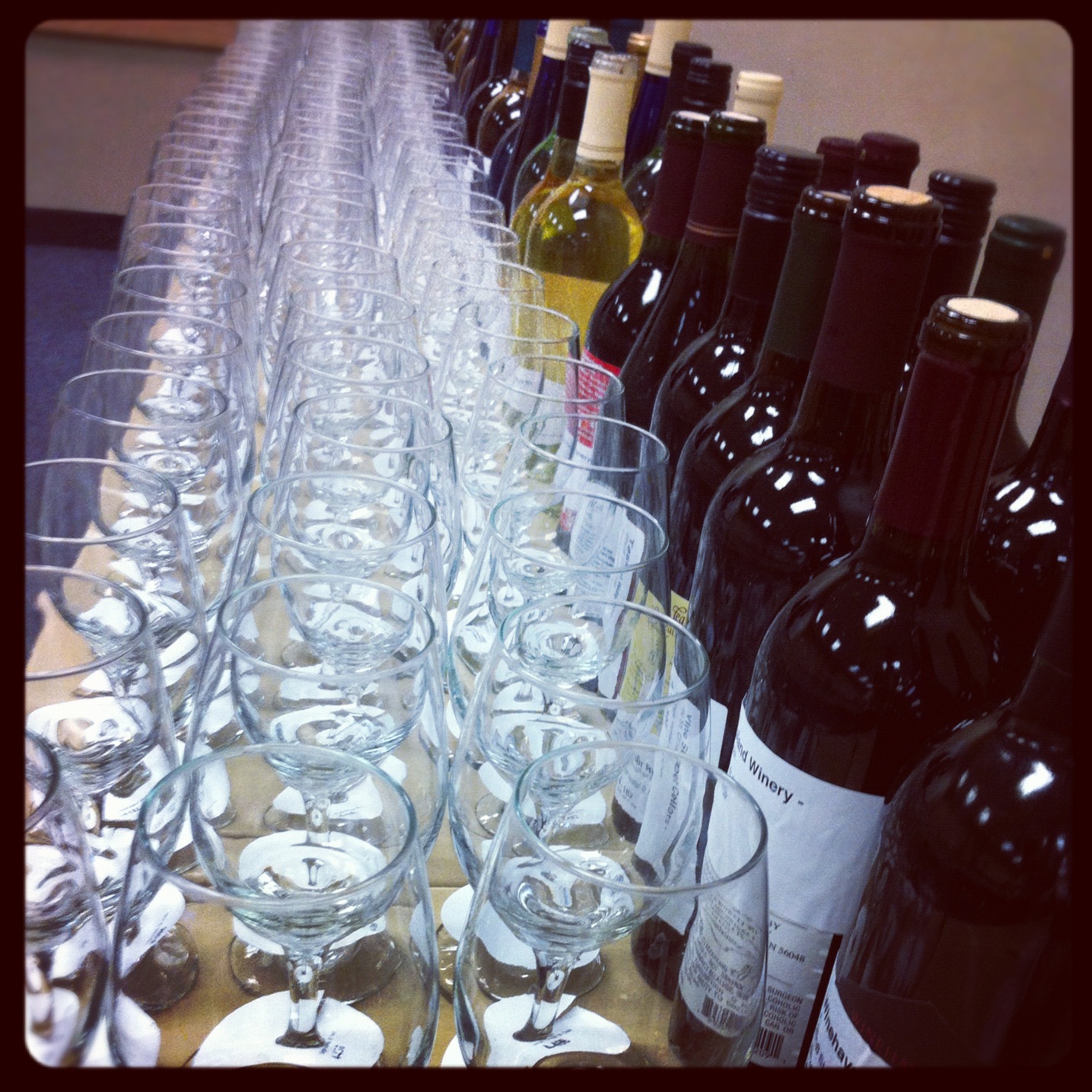
I spent all day Wednesday and Thursday at the 4th Annual International Cold Climate Wine Competition on the campus of the University of Minnesota and the event with off with much success.   A panel of 21 judges were brought in to survey the latest offerings of winemakers who specifically use French/American hybrid grapes (Those that can withstand the cold winters).  The attention that the organizers put into making sure this was a truly blind tasting was fantastic. Each judging team was lead by an enologist and then was balanced out by sommeliers, wine consultants, and chefs.  The flights were organized wonderfully and the back room used for prep was…well, a fun chaos made heady by wine aromas.

1 prep table of 7

Out of 325 wines entered into the competition, there were 2 Double Gold, 20 Gold, 61 Silver, and 79 Bronze medal award winners.  It should be noted of course that the judges did not have to award any medals at all.  I was surprised to see some medals coming out of the Frontenac Gris varietal since it is pretty new, but perhaps that points to a rosy future for the grape.  Minnesota was certainly well represented, but entries came in from Nebraska, Iowa, Wisconsin, Illinois, South Dakota, New York, Vermont and Quebec as well.

The overall “Best of Show” was certainly a landslide victory, taking the top White Wine category as well.  In addition to taking a number of medals, the Four Daughters Vineyard and Winery took all the glory with their La Crescent.  This win points to a lot of hope for the future of Minnesota wine since I don’t think the winery has even been open for an entire year yet.  Much promise is ahead.

The best Red Wine went to Shelburne Vineyard from Vermont for their Marquette Reserve (I told you it was going to be a good red!).  The best speciality wine was taken by Danzinger Vineyards’ Midnight Voyage red dessert wine from Alma, Wisconsin.  If you ever get out to Alma, check out Nelson’s creamery as well for some ice cream, cheese and cured meats.  They also probably have the best wine selection of middle-of-nowhere Wisconsin as well.

Rest assured, the non-medal winners did not go home empty handed.  All of the judges comments are sent back to the winemakers, which for some, was the sole purpose of entering this competition.  It will be this competition that helps define what each cold hardy varietal should be, so the wine drinking masses in the cold regions should have a listen.