Feeds:
Posts
Comments

How We Smell

photo-2

Of all the protuberances extending from our bodies, it is our noses that are held in highest esteem when it comes to enjoying wine.  The Schnoz of a trained wine professional is thought to harbor more natural capabilities than those of normal people.  However, it hasn’t been until relatively recently that the world of science has begun to figure out just how is it we detect and identify odors.

A good reasoning behind this progress is that it hasn’t been until relatively recently that we have been able to begin to understand how our brains work.  It turns out that the nose of a Sommelier is nothing special.  In terms of hardware, we all have approximately the same level of sensitivity.  Therefore, the only real major difference between the nose of an amateur and that of a professional is, like everything else in the world, the amount of practice and training.  That and bravado.  Professionals know that sometimes emphatically stating that something is the way they say it is, regardless of the truth, can be taken seriously. Because really, who’s to argue?

All that practice and training of course, does little to “tone” our sniffers, but more to educate the olfactory memories of our brains.  That’s right, we learn how to pick out smells in the same manner we learn how to play a song.  We memorize the pattern.  This of course means we can mistake one smell for another in moments of error.  Our memories are imperfect beasts.

Speaking of beasts, how many times have you been told that dogs or other animals are far superior smellers that we humans are?  Let me please disabuse you of that notion.  There are two ways to smell.  One is called Orthonasal Smell which happens when suck air in through our nostrils.  There is no doubt that animals with larger and longer snouts than us are superior at this kind of sniffing.  More space for sensors to pick up all of those molecules.  However, there is another type of smelling called Retronasal Smell which happens when we breathe out through our nose.  As far as we can tell ape descendants are the only animals that have a sizeable retronasal passageway to make this kind of function useable.  Therefore, we smell things before we put them in our mouths, and we also smell things (hopefully food) after they have been put into our mouths.  Two smells for the price of one.

He doesn't even care if the steak is cooked well, does he?

He doesn’t even care if the steak is cooked well, does he?

One could say we have a much more developed second dimension of smell.  It is this secondary smell combined with the enhanced processing powers of our brains that actually make us far superior smellers that most of the animal kingdom.  Interestingly, we are the only animals that appear to be concerned with the quality of the calories being put into our mouths for ingestion.  It turns out that even if you have lost your sense of orthonasal smell, that doesn’t necessarily mean your retronasal smell capabilities will be affected.

So what are smells exactly?  It depends upon which part we are referring to.  In wine, a number of different smells that can be found in wines are handily put onto what we call aroma wheels or in lists for our reference.  However, the aromas listed are actually collections of a number of different aromatic compounds which themselves are combinations of various different individual molecules.

Let’s take rosemary for example.  If you were to smell the plant you would say, “This smells like rosemary.” But a more trained sniffer would say, “I smell a combination of woody and floral notes as well as some conifer, clove, and eucalyptus”.  And beyond that, each of those individual aromas are either single molecular compounds or a combination of a few of them.   So an aroma must be thought of as a complex object and not a single entity much like a picture.  A picture after all is a collection of shapes and colors and that analogy is quite a bit more appropriate as will soon be realized. The term bouquet is perhaps more appropriate when discussing the collections or aromas in wines, but we tend to use those terms differently (if not incorrectly) in the world of wine so I will forgo its use here.

Before we recognize aromas though, they must first pass through our snouts to be captured.  Again, once on the way in (orthonasal), and once on the way out (retronasal). How that happens is really still up for debate.  The previous theory was that we had receptors that would accept a single odor molecule much like a key fitting into a lock.  That has been modified over the years with the allowance that perhaps more than one odor molecule may fit onto a receptor.  After all, we might not even have space to put a specific receptor for every single scent we can sniff.  An additional theory is that the odors vibrate the receptors instead of locking into them; much like sound vibrates our ear drums.  Gas Chromatography analysis of smelly things is somewhat based on this vibrational theory as it is used to identify the individual molecular compounds which it visualizes in the form of a plot of different frequencies.  This looks a bit like the sound waves of an erratic melody or the EKG print out of a failing heart.

Regardless of what the actual entry method is and how much is detected, each odor received sends a unique set of signals to a portion of our frontal lobes in the brain that is formed in the shape of a light bulb aptly called the Olfactory Bulb. Because our odor sensing receptors are tuned to multiple odors, the signals flowing up will tend to have overlaps as they hit the Olfactory Bulb.  The outer layer of this section called the Glomeruli is composed of individual cells, much like an LED screen which is “lit up” neurologically speaking with the pattern of the smell.  fMRI studies have actually been able to watch this happen and produce visual images of smell.  Yes, that’s right; when you smell a strawberry, it creates a different image in your brain, than when you smell a banana.

Fig2-c4

However, our noses have different thresholds of detectability for different aromas.  For instance, TCA (2,4,6-Trichloroanisole), the odor we speak of when a wine is “Corked” can be detected when it is merely a few parts of a trillion.  Diacetyl, on the other hand, which is the basis for all of the buttery and creamy aromas takes a few parts per thousand to be detected.  And while there is some variation between individuals on what these thresholds are, there is perhaps more variation found depending on what kind of wine the aroma is in.

To complicate our perception of what we are smelling even further, the aromatic image that appears when we sniff can also be shaped by how we are mentally framed and primed beforehand.  In other words, we can be influenced by what have smelled previously, what we are currently craving, or even what we have been told about what we are going to smell.  For instance, it has been shown that even professional wine tasters have insisted that aromas exist in a given wine even though they do not just because the color of the wine they were smelling had been changed unbeknownst to them.  Perhaps, no one has sneakily changed the color of your wine, but how many of us can recall a time where a particular odor, good or bad, just would not leave us and we insisted we smelled it everywhere.  The nestling of our olfactory processing center so closely to our memory center helps us emotionally connect to aromas, but can also lead to confusion when too much information is presented during a sniff.

Traditionally, when it comes to wine we rely on seasoned experts to assist us in how we should perceive a wine’s aromas. While we assume that the conclusion of a practiced professional will be more consistently correct than an amateur, they are still dealing with a measurement where the human nose is more precise than any other means of measure that we have.  That is to say, you can never be completely sure if the overly poetic description of a wine’s aroma is what is actually emanating from the wine or even if it is the same as what you will sense.  Helpful for the general gist of what we can expect, but should be taken with a grain of salt.  Therefore, when it comes to flavor matching in wine and food pairings, it is best to speak in generalities instead of specifics.  The red fruits in the wine will probably bring out the red fruits in the food even if they aren’t the overripe and slightly confectioned cherries you were told to expect.

Our sense of smell, once relegated to our least powerful sense, has actually been shown to perhaps be our most affecting sense.  Its connection to our memories creates emotional responses when triggered and as we uncover more about how the sense works, it is taking on a new level of dimensionality.  However, the typical wine drinker should rejoice in knowing that even if we marvel at the skill a professional demonstrates when they can identify a wine at first sniff, we all smell things a little better after we have taken the first sip.

Additional sources for reading:

Neurogastronomy: How the brain creates flavor and why it matters – Gordon Shepherd

Taste Buds and Molecules: The art and science of food, wine, and flavor – Francois Chartier
WineByTap

A couple of years ago I sat at a wine bar in SW Illinois.  The unique thing about this place was that behind the curved bar, around 50 taps were installed with the sole purpose of spouting out wine.  However, in an ironic similarity to ever other bar in America, they weren’t actually serving wine by tap.  They had yet to receive a single keg of wine to tap.

The concept isn’t new; it’s been bouncing around in the industry for the past 20 years or so, but the implementation is far from being mainstream.  The appeal of this system makes sense: There is less packaging waste, wine can be sold in more of a bulk form and thus is more efficient (profitable) to move, and shelf life is extended.  Beer has fully embraced the concept for a number of years so I have been wondering for awhile now why wine has been slow to adopt this format.

I posed this question to my friend, Jeremy who will be in charge of expanding the Old Chicago restaurant chain into the SE over the next couple of years.  “Wine sales are so low compared to our other alcohol sales that there’s little incentive to invest in something like that.”  The keyword there being “invest”.  In order to have wine by tap in a restaurant, new taps would have to be put in or existing and profitable beer taps would have to be taken over.  This is additionally hampered by the low number of wines that are actually sold in a tap-able form.  While restaurants like Old Chicago cannot be considered bastions for the wine drinking public, those that primarily serve wine by the glass still face the same Chicken and the Egg situation.

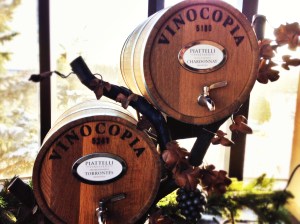
VinocopiaBarrel

The folks at Vinocopia Barrel may have part of the solution.  Their flagship product is a fully contained, wine dispensing system that delivers wine through a spout in their display-worthy barrels.  Therefore, after the barrels are bought, all the restaurant or consumer need to provide is space.  When I stopped in at their headquarters in Minneapolis to see their product it appeared they were attempting to bypass the lack of wine by tap infrastructure.  The barrel itself is more of a housing for the removable container inside which is changed out when empty. However, the only wine you can get in their barrels right now is from Piattelli Vineyards.  Not so coincidentally, the vineyard and the barrel system have the same owner.  Perhaps their recyclable barrel system is more an attempt at coming up with alternative packaging while avoiding the stigma of boxed wine.  Regardless, they do have a slowly growing customer base.

There are those who anticipate restaurants to invest in the wine by tap infrastructure as well.  Richer Pour is a company out of Boston that not only packages wine into a format that can be tapped, but also seeks out a variety of wines to put into their containers.  However, like Vinocopia their system does not involve the traditional metal keg that we are familiar with.  Their containers are disposable once they have run dry.

The metal kegs that seem to be a central focus point of any teenage party movie are wonderfully efficient for not only keeping oxygen out of the contained alcohol, but also keeping the carbonation in.  Perhaps sparkling wines by tap would make more sense to start off with then?  Cocktail houses and their patrons would no doubt appreciate a freshly carbonated pour of sparkling wine that could be reproduced every time.  Until then, we will continue drinking to the soft pops of wine corks being expelled in the background.

Recently, NPR ran a story about the Danish concept of Hygge (“hue-gah”).  Admittedly, I didn’t actually hear the story, but was told about it be someone who only wishes to be described as “The best person in the world” and “Incredibly sexy”, but nonetheless, it sparked both of our interests and some thorough Google research and execution of the concept soon followed.  A quick definition of the word would be as difficult to do as defining Terroir for the wine world, but at its heart Hygge is a warm emotional connection to a moment.  “Cozy” seems to come up a lot when describing it.  However, the best found definition was found here.  The current theory is that Hygge is responsible, or at least a large part of why the Danes are so happy according to people who measure that sort of thing.  Naturally, those of us in Minnesota have been taken with the concept since Hygge is particularly an effective draw during our winter months.  In other words, we view it as a way to stave off the impending madness that comes from the winter doldrums.

Some examples of Hyggelig (“hue-gah-lee”) things:

  • Savoring a warm meal with someone while being basked in the candlelight.
  • Curling up on the couch with your cup of morning coffee and reading a book.
  • Enjoying the conversation of friends on a cold winter’s eve.
  • Hearing your soft footsteps running on a trail in the snow.

Basically, Hygge, is what this blog is all about for those of us who are imbued with the world of wine. Interestingly enough, the other dovetail of Hygge and this blog (which I assume is the American national past time) is that it’s all about mental framing and priming.  When an idea is framed, it is put in a certain context.  This is like setting the boundaries of a debate topic, or when the media presents a story in a certain light; in a way, how you think about something is restricted by the parameters set forth.  Priming on the other hand is presenting bits of information ahead of time that influence the direction your thought process goes down in the future.  If you’re paranoid, you’d probably call this being brainwashed.

You will like this wine.  Shhh, don't talk, just drink.

You will like this wine. Shhh, don’t talk, just drink.

Framing and priming are an integral part of the wine and food experience.  We have expectations [framing] as to what a wine will taste like and if it meets or exceeds that expectation we will have a positive experience.  If we just recently took a whiff of a particular herb and we notice an herbal smell in a wine, we are more likely to label that wine aroma with the herb we originally took a whiff of [priming].  This is why wine descriptors, although fun and sometimes poetic, are mostly bullshit, but I will have more to say about that in a future post.  I have often been asked how I create wonderful experiences revolving around wine and food and to take away some of the shroud of mystery, it’s mostly that I am able to frame and prime people’s mental state in the way that I want for the experience I give them.  Yes, I have a certain level of cooking ability and a knack for judging what wines various people will like with a meal, but if I just set a dish down with a glass of wine down and said “Here’s your dinner. Eat it alone.”  the Hyggelig-ness (I just created that) of the situation would drop dramatically.  So I put the lights down a little lower, set the music to match the mood (always have music), light some candles, point out aspects of the food and wine that I think go together well, and lo and behold; suddenly we’re having a good time.

Let’s take that clambake I did back in the summer as an example.  If you tried to recreate that yourself, you could have gotten the exact same food and the exact same wine, but it could have really sucked as an experience for you if you ate it in a hurry in between doing errands or with a dog constantly barking at you, or perhaps you were just in a bad mood.  You really have to linger in the experience to the point where it become intimate.  Notice I didn’t say grand, opulent, or even fancy. Just intimate.  Connected.

Anyway, tonight I will be creating some Hygge with a dish of pasta, chorizo, and chickpeas and most likely a darkly fruity red wine (Pro secret: you can generally enjoy any wine with any food as long as you like them both and make slight adjustments if necessary).  I will wear my most Hygge heavy shawl sweater.  The atmosphere will be set with a fire in the fireplace, some ambient candle light, the lights from the Christmas tree, and some music turned down low as the snow falls outside.  Conversation will be enjoyable, and most importantly, the experience will be lingered over.

image_2

Hygge prep

As the Cranberries once asked: “Do you have to, do you have to, do you have to let in linger?” To that I say Yes, Cranberries, yes you have to let it linger.  Therefore, I hope all of you, especially those of us in the wintry north and the shortest days, find some Hygge this winter.

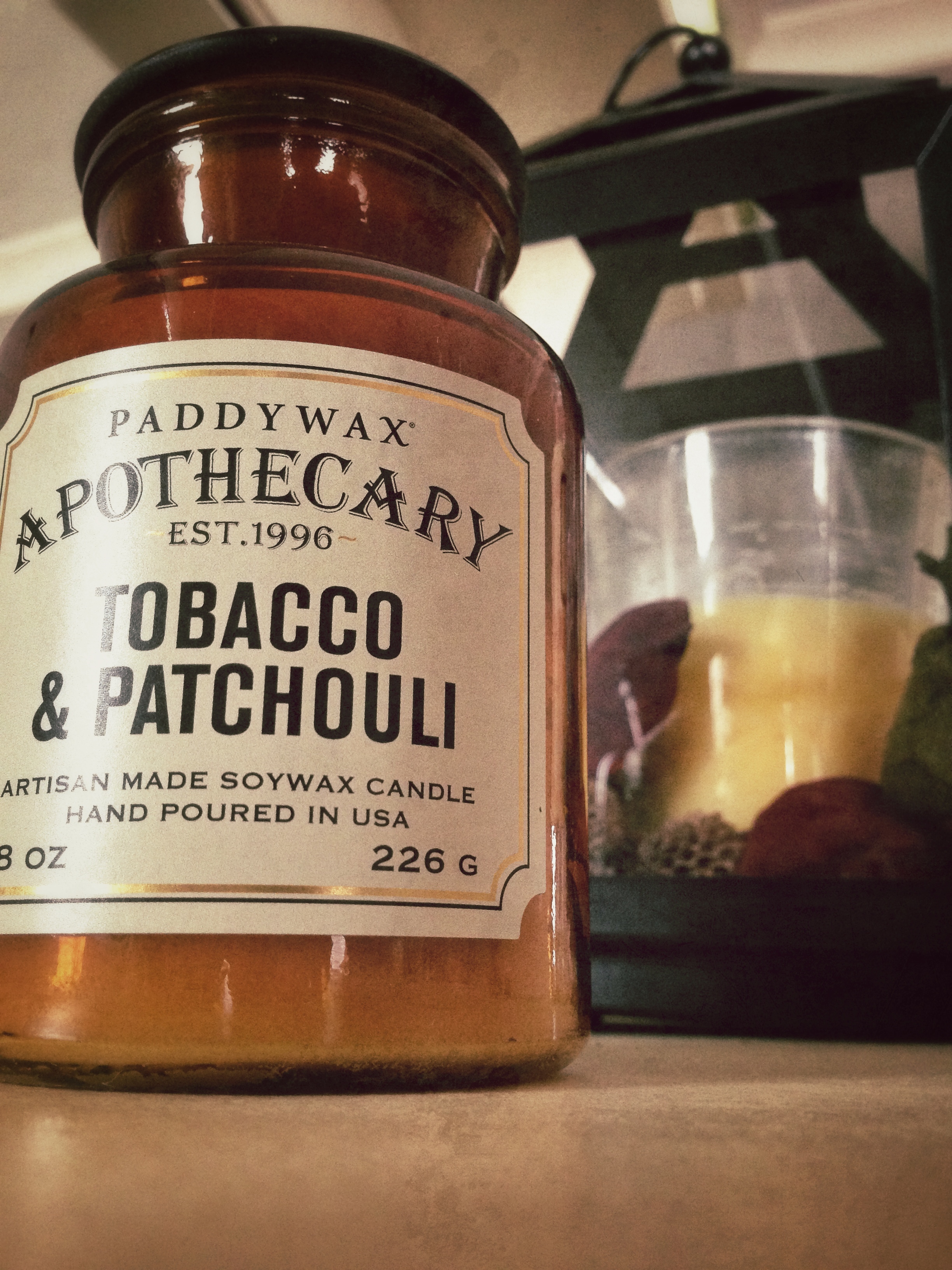
Mega-Hygge candle

Mega-Hygge candle

TNS #3

Another example of how loquaciousness would get the best of me if I wrote tasting notes.

PurpleField

I lay in a field of lilacs. The coolness of a spring breeze lightly brushes over my skin as it wisps across the prairie.  A butterfly anointed with yellow and blue flutters by as I raise another bit of fruit to my lips; tasting, lingering over the lusciousness of it.  The day moves slowly laying under these few wraiths of clouds painted onto the benevolent sky.  Life moves like a glacier.

The simplicity is what is astounding. Seemingly, there should be layers of complexity, webs of mathematics beneath the displayed elegance before me, but alas, I can see none.  The purity of the flowered air is only impugned by a hint of baking spices in the near distance.  And this, yes this mere whisper of spice is enough to arouse my appetite once more.  “The day is young.” I declare to the butterfly and with that I rise to my feet in pursuit of more substance.

photo-9

I know you’re probably being inundated with what you should/absolutely/must have for the best/most exciting/most extravagant Thanksgiving this year for wine and food and I promise I will not do that to you.  Instead, I’m just going to tell you what I’m going to have. As a bonus, I’m even throwing in the recipes.  What?!?!? Aaron is giving us recipes? That’s right. I’m going all mainstream on you.  Not just listing the ingredients like I normally do and making you figure it out, but actual recipes that you could follow if you wanted to do that sort of thing.

This year I’ve decided on a South by Southwest theme.  No, not the festival in Austin, but southern and southwestern cooking mixed together.  My mother grew up in the south, my father in the southwest…so meta.  Anyway, as always, if you want advice, send me an e-mail with what you’re having and I’ll help you pick out some wines.  Happy early Thanksgiving!

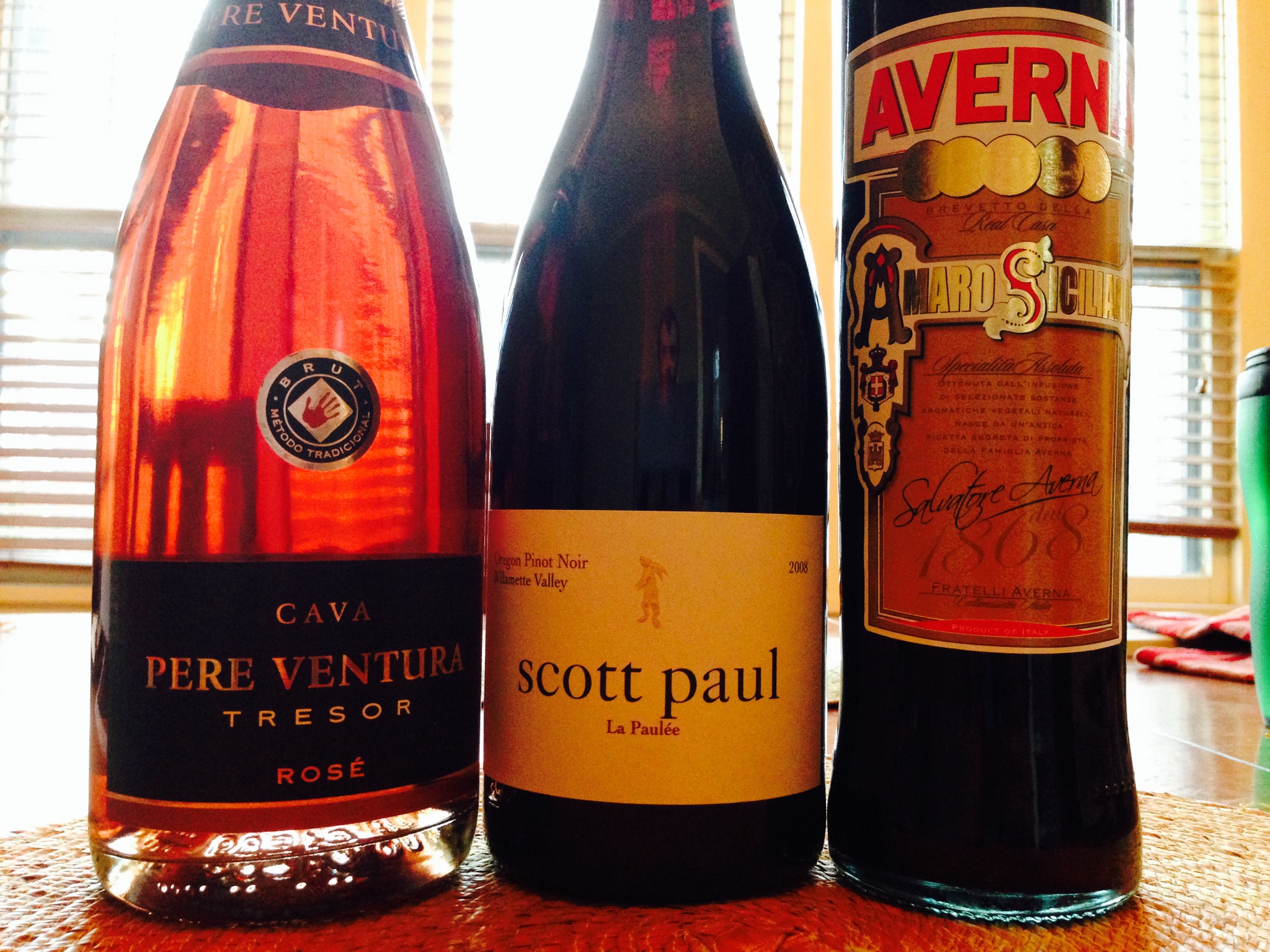
The Wines

Aperitif: Pere Ventura Tresor Rosé

Meal time: Scott Paul La Pauleé 2008 (Pinot Noir)

Digestif: Averna Amaro Siciliano Fratelli Averna (Not wine, just in case you were wondering. Amaros are hot this year, oh yeah)

Turkey

The Brine (Do the day before):

2 gallons water
2 cups Kosher salt
1 cup granulated sugar
1 fennel bulb, split
1 white onion, split
2 limes, sliced
4 sprigs of thyme
2 sprigs of rosemary
2 sprigs of oregano
2 tablespoons fennel seeds
2 tablespoons coriander seeds
1 tablespoon black peppercorns
1 bay leaf

Toast all the spices in a skillet until they are aromatic, then put all of the ingredients in a stock pot and simmer until the salt is dissolved and the fennel has softened a bit (10-15 minutes).  Let the brine cool, put your turkey in and cover it for at least 12 hours.  Before you’re ready to pop it in the oven, remove from the brine and pat dry.  Preheat the oven to 400F Then add the rub.

The Rub:

1 tablespoon coriander seeds crushed
1 tablespoon fennel seeds crushed
1 teaspoon  thyme
1 teaspoon rosemary
1 teaspoon oregano
2 tablespoons crushed dried chilies (ancho, guajillo, etc.)
Peel of 1 small lime (no pith please) grated
1 tablespoon minced onions
4 tablespoons softened butter

Mix all ingredients together and rub all of your turkey.  Get it mostly under the skin.  Yes, your hands will get dirty.  You can wash them later.
Pop that bird in the oven at 400F for 30minutes.  Hopefully, you have a meat thermometer.
Turn the heat down to 325F and continue to cook for 1 hour.
If you have the time, turn the heat down to 250F and cook until the white meat is 165F or the dark meat is 175F, otherwise just leave it at 325 and your bird will finish up within another hour.  If you want to get crazy, go ahead and baste the turkey with the drippings that fall every 1/2 hour or so.  Expect your total cooking time to go up a little when you do this though since heat is escaping the oven.  On to the sides!

Green Chilies Sauce (Replacement gravy)

2 cans green chilies
½ quart cream
Salt/pepper

Put the first two ingredients in a saucepot and raise to a simmer.  Add salt and pepper to taste.  Make 10 minutes before you serve all the food.  For the advanced user, instead of the canned goods, go ahead and get 4 poblano peppers.  Stick them on the grill with the corn until all sides are blistered and blackened.  Then slide them into a sealed container or bag for a few minutes so they steam up a bit.  Peel off all the skin, then slice and dice.  Voilá. Your own chilies.

Trivia for the dinner table:  The spelling “Chili” refers to any member of the Capsicum family, many of which are used in cooking.  This can also be used to reference the dish which football fans love during the fall.  It can also be spelled as “Chile” or “Chilli”.  The “correct” spelling is debatable.  However, the country of Chile would like to insist everybody spell their name as is.  I have seen this embarrassment in grocery stores and wine shops in which they spell the country of Chile, “Chili”.  

Hot Sauced Brussel Sprouts

1 lb Brussel Sprouts
1 tablespoon Olive Oil
Salt/Pepper
1/2 cup your favorite hot sauce
1 tablespoon Oregano
1 tablespoon butter

Clean, slice of the stems, and halve the brussel sprouts then toss them with the olive oil.  Roast those bad boys at around 350 for 15-20 minutes until the edges get brown.  Meanwhile heat up the butter to melting point and mix it with the hot sauce and oregano.  Once the sprouts are done roasting, toss them in the hot sauce mixture.  Enjoy the ensuing mouth-gasm.

Grilled ears of corn

4 ears of corn
Soak. Pat dry. Grill.

Soak whole ears of corn for 20 minutes in water.  Pop on a flaming hot grill.  Rotate after you see grill marks on the bottom. Take them off when grill marks are on the other side.  10 minutes-ish to cook.

Wild Rice with cranberries

1 cup Wild rice
½ cup Cranberries
3 cups Chicken broth
1 Tablespoon sugar
½ cup chopped Pecans
2 tbsps Butter
Salt to taste

Put the rice, broth and butter in a pot and bring to a boil.  Cover, reduce the heat to low and let cook for 20 minutes.  Add the cranberries, sugar, and pecans and some salt if needed.  Stir. Cover again and cook for another 30 minutes or until the rice is fluffy and you don’t see liquid bubbling around.

Pickled Okra and Jalapeños (Make at least a week in advance)

1/2 pound Okra or enough to fit into a big mason jar
1 Jalapeño, sliced
1 tablespoon Dill
2 teaspoons Juniper berries
1 teaspoon Fennel seeds
Dash of Cayenne if desired
Salt to taste
2 tablespoons Sugar
1/2 cup Vinegar
1 cup Water

Bring the water, vinegar, sugar, and salt to a boil. Meanwhile stuff your your okra and jalapeno slices into the mason jar. Add in the dill, juniper berries, fennel seeds, and cayenne. Once the liquids are boiling, take them off the heat and pour into the mason jar until the dry ingredients are covered. Seal the mason jar closed and refrigerate for at least a week.

Pecan Pie

It’s a secret southern mother recipe. Sorry.

Homemade pappardelle blended with sauteed leeks, chives, lemon zest, arugula, prosciutto, and a dusting of Parmesan cheese.

Wine: Domaine de l’Aigle à deux têtes Côtes du Jura 2008

cotesdujuraNotes:

Yeah, that was a mouthful just to type!  If any of your are looking to plumb the depths of what wine explorers term “interesting”, you can start with a Côtes du Jura. This tiny little region in France is known for producing some particularly interesting wines such as their vin jaune (yellow wine).  This particular wine was not one of their most interesting ones, but fun and a good pairing nonetheless.  As an extra feature, they even dip the tops of their bottles in wax.  I personally think that just makes it harder and messier to open, but there are people who enjoy the extra touch.  It’s a blend of Chardonnay and a few other grapes that most people (even your most learned wine friends) wouldn’t recognize.  The wine carries a lovely acidity dominated primarily by lemon that brought out the lemon zest in the dish.  The rest of the body was a nice match for a this plate that was perfect for a cold winter’s night without actually being “heavy”.  It was adequately filling and fresh.

photo (1)My home of Minneapolis is full of people who are rather enamored with beer.  I’m not talking about bros grabbing a cold one as they scan for ladies between rounds of Buck Hunter* (as apparently all of us do according to a now infamous NY Times article).  What I’m referring to is the insurgence of Craft Beer that has gained a strong foothold bolstered by people passionate about not just drinking beer, but how it’s made, how it works, and most importantly, how to infuse unique and artistic flair into something that has long been a mass-produced product.  Admittedly, I can in no way be classified as a “Beer Drinker”, but I still watch the movement as well as sample their progress along the way because it’s cool.

As the movement has been progressing it has been looking to the world of wine for a little guidance.  Some of it has been general instruction on how be called “Fancy” at dinner parties, but there has also been a push to pair beer with food á la food and wine pairing (the greatest experience known to humans).   Honestly, most of it I have seen thus far has been, to put it very nicely, a bit of a stretch.  Food science is generally ignored with this effort and it seems mostly to be an exercise in filling content for media to gain the Craft Beer lovers as a readership demographic.  So it was with that mentality that I quickly read a few lines of an article entitled: “Beer Vs. Wine” in our local beer rag, The Growler.  I skimmed over the first few lines of a portion someone had pointed me to about pairing beer with food and promptly walked away with disgust.  The author had sought guidance from a sommelier who gave him a list of Dos and Don’ts and I thought to myself “There is no hope for these people!”

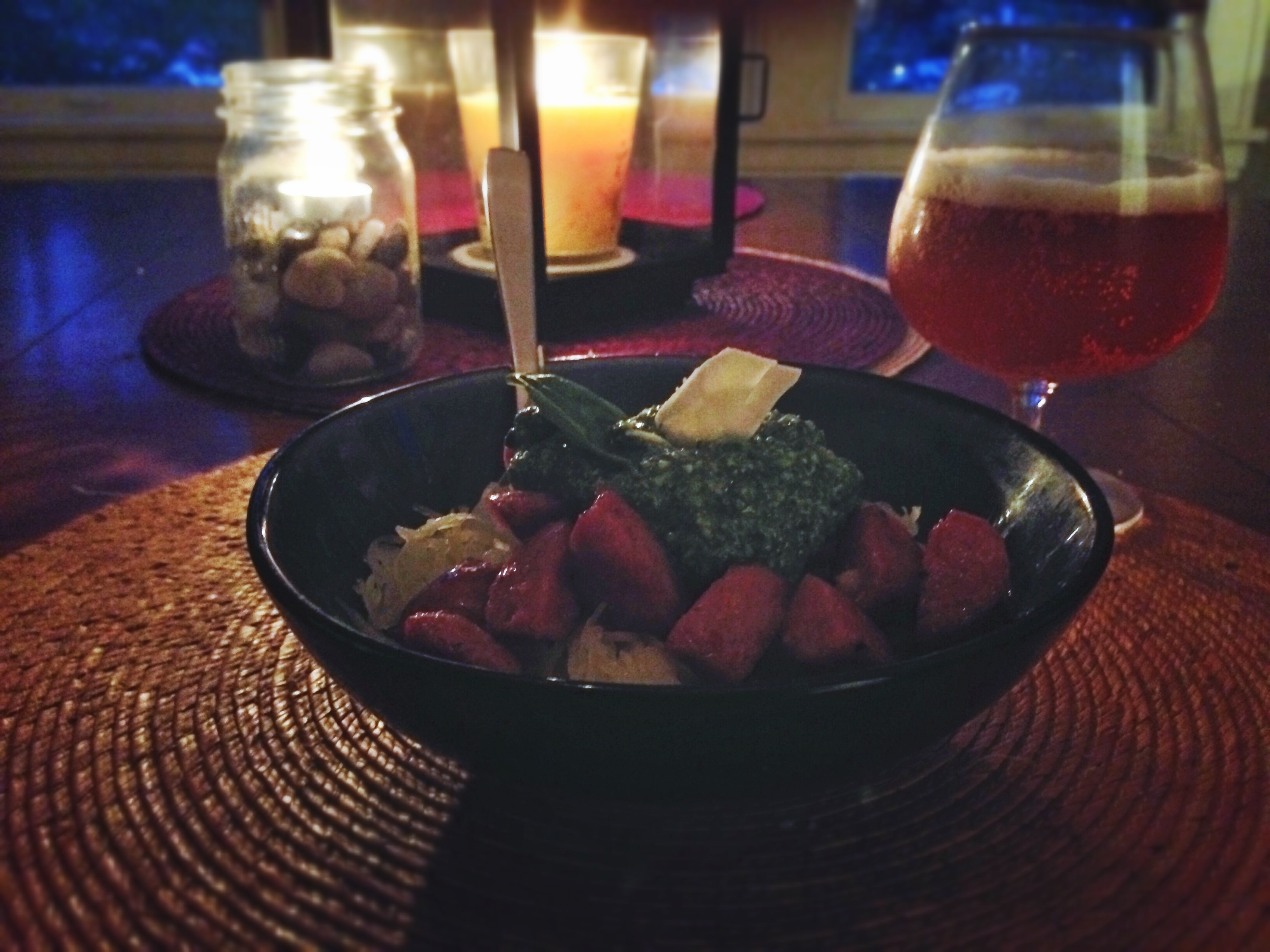
After having a brief conversation immediately following that about why I thought pairing food with beer was worthless (Yes, it was mostly me talking), I began to question whether that was an accurate statement.  This was after of course actually pairing a seasonal lager with a dish of andouille sausage and walnut/spinach pesto over a bed of spaghetti squash as seen above and struggling mercilessly to define whether it actually paired well or not.  The next day I actually read the full article and you should too.  It’s a pretty good article.  The author’s conclusion is actually that beer and food pairing is just beginning so people are still feeling their way around the whole concept which I would say is a good summary.

Yet over the past 24 hours my mind has begun to ponder possible interactions between beer and food and I’ve decided that what the beer community really needs is a good framework in order to begin to hash out their own guidelines (not rules) about beer and food pairing.  With that, I humbly offer some points from the evidence-based wine world to get them started.  I honestly look forward to future progress and I think there will be some surprisingly wonderful results.

Work with good chefs.

The craft of wine making developed alongside the craft of cuisine.  Why it was wine instead of beer or another beverage, I have no idea, but regardless, this means that wine and food already have a partnership.  Wine makers have generally assumed that their product was to be consumed alongside food and chefs traditionally assume a fine meal will be accompanied by some wine.  In other words, sometimes they are literally made for each other.  However, if a chef designs a meal with a specific beer in mind, the results will be much better than just trying to pair a beer to a dish already thought up.  Keep in mind though, that I don’t think any beers are made with the specific thought that they should be consumed alongside a meal.  So once the chefs are willing to give a little taste of what they can do, it would be best to return the favor.

Map out the relationships between the components of food to the components of beer.

This is something the wine world is just starting to do, but the fact that knowledge exists on this topic, it should be incorporated.  Maybe I’m missing it, but I can’t find where things like acidity or alcohol are being evaluated on standard beer evaluation methodologies.  Maybe they don’t matter when judging the quality of a beer, but they sure do matter when pairing with food.  What happens when you mix the varying acidity levels of beers with spicy foods? Why do parts of beer (i.e. carbonation) go well with salty foods? Ask questions and try stuff out.  This is an area I can certainly help with.  From this experimentation, guidelines can be developed and referenced.

Avoid Dos and Don’ts.  Especially Don’ts. Focus on explaining the experience.

We have plenty of fallacies in the wine world that have manifested themselves into rules about what we should or shouldn’t do instead of just stating why something we are experiencing is happening.  There are plenty of sommeliers that will tell you never to pair a big tannic red with a light fish.  However, if you cook up that fish in a creamy or butter sauce, make sure there is enough salt or citrus acid to reduce the astringency from the tannins, and then force the pairing down someone’s throat, they’d probably think it was pretty good.  Therefore, once you have guidelines based on what is actually being experienced in a pairing, let the chef planning the menu or the person consuming the meal decide whether or not they want to experience a certain aspect of the pairing or not.

Encourage the consumption of beer with a meal. Not necessarily by itself.

This is something America as a whole needs to do a better job of.  There are a whole host of reasons as to why drinking with a meal and not consuming alcohol by itself leads to a healthier lifestyle.  Having the Craft Beer movement be part of this push though would also help establish itself as a beverage that can add to the dinning experience.

Consider alcohol levels.

The alcohol content of wine has slowly been inching upwards so now wines are more commonly reaching the 15-16% ABV levels.  It is generally agreed that these higher levels may perhaps be too alcoholic to blend with a dish because they start to overpower them.  We are also seeing fewer wines being sold in the 11-13% range which is unfortunate, because this is a generally appreciated area for alcohol to be when being paired with food.  So while beer generally sits below the 5% range, some of the more crafty ones are being delivered at higher levels with good results.  Now, I think this will vary with the type of beer being made, but my personal opinion is that the most sublime opportunities for beer and wine pairing will be with beer around 9% ABV.  The point is that the wine world is leaving the bottom level open for you if you’d like to come in out of the rain.

*As an aside, I played Buck Hunter for the first time down in Iowa a couple of weekends ago…I still don’t get it.  

On Aerating Wine

And if you just put your glass of wine underneath like so...it's gonna taste better.

And if you just put your glass of wine underneath like so…it’s gonna taste better.

A while back, I wrote a post on hyper-decanting and how oxygen affects the aromatics of the wine right before you drink it.  Apparently I wasn’t very clear in one respect though so I’ll be exceptionally clear now: Don’t buy wine aerating accessories.  They are stupid.  Now, I know everybody that read up on my experiment shuns toys like the Vinturi, but apparently people keep buying those things; so as a PSA, please tell them to stop doing so for their own good.  If you’d like, have them read through their patent application and find where it states how their method of aerating the wine will improve the wine.  They won’t be able to because it’s not there.  Fun fact: Vinturi is gimmicky derivation of the Venturi Effect which describes the reduction in fluid pressure experience when the fluid flows through a constricted piece of pipe.  The concept is generally used to mix liquids, gases, or a combination of the two at a different pressure than they would be just dumping them together. 

This is not to say that you shouldn’t decant or swirl your wine up with oxygen (with or without a motor-powered mechanism to do so) to get those aromatic compounds moving about.  But I haven’t found a single, impartial taste test done that shows a Vinturi would be a solid purchase to aid your wine drinking habits.  Even these folks at the Huffington Post who don’t know much about wine couldn’t support it.

Let’s review the 101 on oxygen and wine aromatics:

  • Oxygen is generally avoided during the process of making wine because fermentation is an anaerobic process.
  • When oxygen interacts with finished wine, it aids in releasing aromatic compounds.
  • Different aromatic compounds have different densities.  If we could visually see what we smell in a glass of wine we would see the fruity aromas sitting up at the top and the earthy odors down towards the bottom.  This is why Riedel feels that everyone needs a different glass for every different type of wine, which I feel is slightly flawed logic.
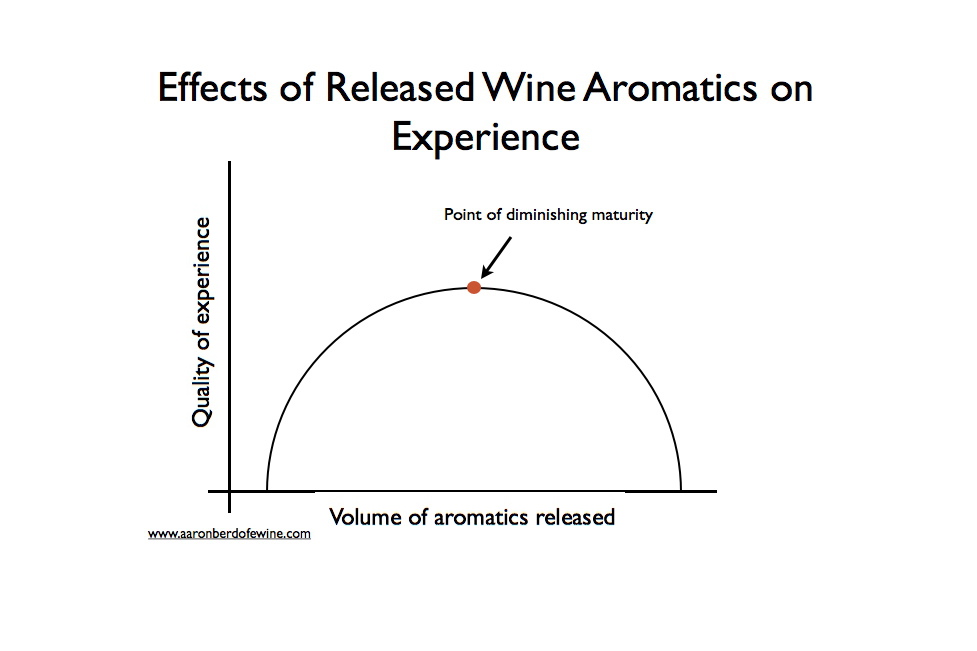
  • There is a finite amount of aromatic compounds in a glass of wine.  The most enjoyment comes when they are at the peak of their release (or escape if you visualize them as imprisoned revolutionaries, as I do) and the varying compounds are being released in balance to one another.  I developed this popular chart and the term “Point of Diminishing Maturity” previously to assist in learning how this works:winearomaticsexperiencechart-0012
  • Usually the length of time a wine will need to be decanted, or to just sit there until you find it best to drink depends a lot on how far along the maturity path the wine already is.  If it’s an old and tannic red wine, it may take up to 2 hours in a decanter to “wake up”.  If it’s a vibrant young wine that just needs a little settling down, it could take 5 minutes.
  • Your preferences as to what you view as being “perfect” will be different than someone else’s.

Given these points, here are some reasons why one would want to decant or hyper-decant a wine:

  • Off-odors exist. A lot of these off-odors (sulfur, garlic, cabbage, rubber) tend to have a lower density than the desirable aromas and thus would “blow off” or dissipate.
  • The wine aromas seem unbalanced.  Pour it out.  Let it sit. See if they readjust themselves.  However, it could be just that the wine itself wasn’t made that well and is inherently unbalanced.
  • The wine seems “Tight” or you don’t seem to be getting much aroma off of it.  I find that a lot of this problem can be resolved by letting the wine warm up a little bit, especially with whites.  Letting the wine sit in the bottle or a decanter for awhile usually has the desired effect too.  You can also do a little Hyper-decanting if you’d like.

Oh, P.S. a milk frother works pretty well for hyper-decanting.  Bonus points: it can be done in your already poured glass of wine and it costs around $5 at Target.  Whir until fully frothy and then let it sit for 5 minutes. Win!

Now here’s Vinturi’s claim:

Traditionally, decanters were used to aerate wine. However, decanting is time consuming, cumbersome, and inconvenient.

Let me correct their marketing departments warping of a fact first:

 Traditionally, decanters were are used to aerate wine.

Now, let’s examine the remaining claims about how evil decanting is.

  • Time consuming.  The active time it takes to decant a bottle of wine is approximately 10-20 seconds depending on how fast you are pouring the wine.  Then you let the wine sit in the decanter between 0-120 minutes depending on the wine.  With decanting mentality, the time you let the wine sit depends on what the wine needs.  With Vinturi mentality, Vinturi give you one length of time for their “processing”.
  • Cumbersome.  Decanting a bottle of wine requires you to not only open a bottle of wine, but to also get a decanter out and pour the wine into it.  If you don’t become exhausted doing that, you may find the energy to drink your wine after this is complete.  The Vinturi method involves holding their device perfectly above your glass and making sure you pour the wine at the correct speed so it doesn’t overflow the device every single time you want a glass of wine.  …Yeah, their method is much less cumbersome.
  • Inconvenient.  I’m not quite sure how they are justifying that their Vinturi device is more convenient than a decanter, but I would back up the claim that it’s easier than hassling with a blender for some hyper-decanting.  However, you probably already have a blender so you wouldn’t have to spend $25 on a new kitchen gadget (compared to a $5 milk frother).  Admittedly, people spend a lot on decanters because they view them as works of art, but that means the decanter is solving a person’s need to feel “arty” as well.

To recap, the amount of oxygen that needs to be mixed with the wine before you deem it to be “perfect” to drink will vary greatly between wines and between people.  Therefore, a “One-size-fits-all” device probably can’t be justified as being appropriate to tackle the problem of getting the wine to the point where you think it’s perfect to drink.  Please file this under evidence supporting my notion that the vast majority of accessories for wine are stupid and pointless.


image

Vermont!

For the past few months I have been traveling for my other career to Vermont on a regular basis.   As far as my usual destinations for work go, Vermont is a breath of fresh air.  That breath of fresh air is occasionally tinged with the various scents of manure depending on the wind direction, but Vermont is after all a mecca for the Local and Sustainability movements.  It is home to various farms praised in the Omnivore’s Dilemma fame, and author Bill McKibben who argues against the notion that growth is an essential ingredient to a healthy economy in his book Deep Economy.  Addison County, VT is also home to the largest agricultural fairs in the nation.   Naturally, I wanted to see how the local wine scene was progressing.

By chance, or perhaps more likely because she is always there, I happened to walk into the Lincoln Peak Vineyard tasting room when Sara Granstrom was pouring.  Although she’d never admit it, Sara is something of a rising star in the Vermont wine scene.  She has been working in the fields since she was a kid and her father, Chris Granstrom, was known for producing strawberries.  Since, 2001 however, the mostly-family team has been growing grapes and then making wine and the strawberry fields are part of their past.  The switch happened at an opportune time as well as they have been able to adopt the cold hardy hybrid grapes that are coming out of the University of Minnesota and elsewhere.

photo

In addition to the time-consuming demands a vineyard entails, Sara is also the recently elected President of the Vermont Grape and Wine Council which coordinates efforts to advance grape growing and wine making in the state of Vermont.  Lincoln Peak is just one of about 25 vineyards and wineries that make up the council with a handful of meaderies, apiaries, and orchards added in.  The actual state of Vermont is putting some serious investment into the wine industry and for good reason: they have some good quality wines already coming out.  For the past 3 years, Shelburne Vineyard has been nabbing the Top Red Wine award at the International Cold Climate Wine Competition (ICCWC) with their Marquette Reserve.

Sara, and it seems the rest of cold hardy grape producers and wine makers, are taking note that Marquette and La Crescent are the two darlings when it comes to wine production in the northern climates.  She’ll also tell you that Vermont wines are on the cusp of really developing a regional character and as I mentioned in my overview of judging the ICCWC this year, I certainly agree.

As a bonus for this post, and in the style of my previous interview, check out the audio of our conversation below.  Admittedly, I had to chop it up a bit, because Sara is apparently very popular at the restaurant we chatted at, but don’t worry, we still figure out what wine to pair with a maple milkshake.

For those interested in the Northern Wineworks book Sara mentioned. Follow the link!

Listen to the interview!

Download the interview!(right click and save)

photo (1)

This past Friday I was a judge at the International Cold Climate Wine Competition hosted at the University of Minnesota.  I’ve helped out at the event before and honestly enjoy being on both sides of the competition because I think it is well run.  They use ranked voting in the final round to determine winners which even those who think very little of wine competitions tend to agree, works out pretty well.  Here are the results for the top awards:

Top White Wine: Parallel 44 (Kewaunee, WI) for their La Crescent

Top Red Wine: Shelburne Vineyard (Shelburne, VT) for their 2011 Marquette Reserve

Top Specialty Wine: Illinois Sparkling Company  (Peru, IL) for their “Stereo” sparkling wine blend of La Crescent and Frontenac Gris

Top Minnesota Wine: Millner Heritage Vineyard and Winery (Kimball, MN) for their 2012 Little Iza (La Crescent)

Overall, I think there were a lot fewer moments when judges were impressed by the wines this year compared to the last, but I don’t think it was caused by a drop in quality; just a rise in expectations.  I was involved in a debate about whether to award medals to wines simply because they were free of faults or not. I stood on the side that technical proficiency should certainly set the bar, but was not necessarily a determinate of medal-worthiness.   There’s always debate in the wine world as to whether or not some faultiness is acceptable. We don’t judge the most influential albums on the technical execution by the musicians do we? Yes, they have to be good enough, but do they need to be perfect in order for us to get the point?

The most surprising thing I learned from the judging experience was how little people know about what goes on during a wine competition or how they work.  To help the general public I have composed an FAQ made up of actual questions I have received to hopefully clear up some misconceptions.

The Wine Judging FAQ

1. Aaron, how do you hold all that alcohol? You’re drinking like 40+ wines in a day. Are you Russian or Irish?

Truth is, I have a little of both in me, but that’s not relevant.  As expert wine judgers, we spit out all the wine that enters our mouths after we have tasted it.  Yes, that’s gross, and no, we don’t make mistakes about which glass to reach for.

2.  Can I watch? I’d love to see you in action! You’re soooo dreamy and handsome!

Wine competitions are usually closed events and for good reason.  I’m not sure anyone would really want to watch a bunch of people sitting around tasting wine and then spitting it out all day.  Although, I do suppose people watch golf and fishing, which are at the same excitement level, but I don’t think most reasonable people can handle it.  After all, it’s not like you’d get to participate.  The press shows up and takes awkward photos or video of you swirling and swishing, but they usually look like they’d rather be drinking the wine.  However, if you’d like to get a group of adoring fans together for my next event to do some tailgating, crazed cheering during the breaks, and maybe some autograph signing if I’m in a good mood, then that’d be just fine.

3.  Is the International Cold Climate Wine Competition truly international?

Yes. 300 entries were received from commercial wineries in 12 different states and Canadian provinces (Count: 2 countries).  We even had Canadian judges!  Some “international” competitions can’t claim this.  In fact, I’m pretty sure there are some “international” airports that can’t support their claim either.  The ICCWC is unique in the fact that only wines made from cold hardy (French-American hybrid grapes) varietals and fruits are allowed.

4.  Anybody can judge wine, right? You’re just saying which ones you like?

No and no.  Wines should be judged on two aspects: one the technical details of the wine (Appearance, Nose, Palate, Finish, Faults) and the other is whether the wine is a good representative of what it is.  Knowing both of those items takes a great deal of experience and knowledge.  Personal preference should always take a back seat.  Just to toot my own horn a little bit here: I was able to correctly identify through blind tasting that a Marquette that I felt most represented what a Marquette is was actually from Vermont.  I knew this because I have had a lot of experience with Marquette (not unique in the room of judges) and also I had a lot of experience of tasting Vermont Marquette (unique in the room of judges).  This was in fact the Vermont Marquette that won the Best Red award.

5.  How do you keep tasting things all day? Are you a super taster?

Very good question.  Most wine competitions limit the number of wines judges can taste because palate fatigue is a very real thing.  Varying the kinds of wine being tasted certainly helps, but going over 50 wines is just asking for some lazy tasting at the end.  If judges are tasting some astronomical number of wines you can be assured that there will be a high margin of error.  And to the second question; no, I am not a super taster.  I have yet to count my taste buds, but my preference for whiskey neat probably puts me in with the more tolerant tasters.  In other words, I’m not overly sensitive to certain things.

6.  How can I become a wine taster?  That sounds like a pretty neat job.

Through hard work and dedication, kid.  Keep at it.

6a  Keep at what? What am I supposed to work hard at?

The work that needs to be done, of course! Just work hard at everything you do.

6b  But what should I work hard at?  Can’t you give specifics?!?!

DON’T MAKE ME REVEAL ALL MY SECRETS!!!!!

***I am no longer taking any questions at this time.  Thank you.