Feeds:
Posts
Comments

Rating: 4/5

Homemade Ragú sauce over brown rice.  That simple.

Wine: Tygerberg  Sauvignon Blanc 2010

Notes:
Sometimes you just have to throw out all the traditional conventions.  I was doing a test run of a Ragú sauce for a New Year’s event and I had a bottle of South African Sauvignon Blanc sitting around.  Ragú, by the way is a basic style of Italian sauce with tomatoes, herbs, onion, carrots, chopped up beef , a bit of cream to thicken and a dash of vinegar; please don’t think I opened up a jar of the brand name stuff.  The sauce turned out fantastic.  The Sauvignon Blanc also turned out to be pretty fantastic as well.  As an extra bonus, they worked together pretty darn well.  The Sauvignon Blanc was green all over.  Grass, green pepper, green fig and it had a good sized body that with its acidity, went nicely with the texture of the sauce.  The greens in the wine really highlighted the herbs I had used to flavor the sauce.  It also helped that the beef was chopped up into small pieces and cooked to tender perfection.  Would this have worked with a New Zealand Sauvignon Blanc? Probably not.  You will not find this pairing ANYWHERE, but it works.  Try it out!

Oxygen.  We keep it out as much as possible when making the wine and then we add as much as we can in when drinking it.  We swirl.  We decant.  We aerate.  Adding oxygen into the wine right before we drink it is such a thing that a good portion of the wine accessories business is devoted to it.  But why?  What does mere oxygen do that improves the experience?

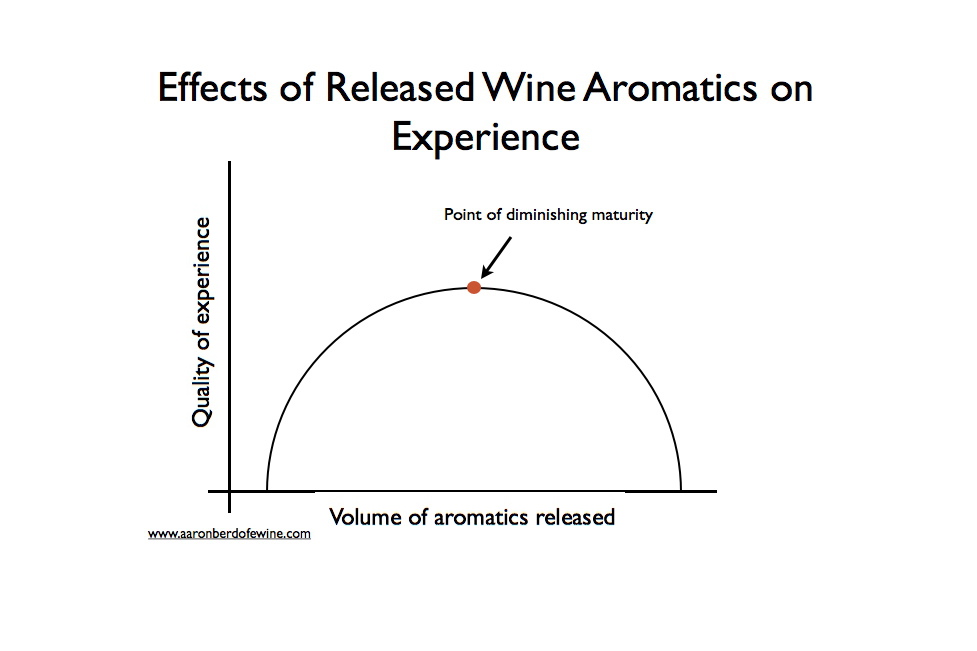
The theory (which has a bit of science backing it up) is that when oxygen hits the wine, the aromatics (esters, terpenols, etc.)  that have been tightly bottled up are encouraged to be released.  As more aromatics are released the wine should be more intense on the nose and then more balanced and apparent on the palate as well.  However, a wine has a finite amount of aromatics so there should also be a point of diminishing returns.  How far along the curve (the wine’s lifespan) the wine is generally referred to as the wine’s maturity, so I’ll call this the point of diminishing maturity.  Please feel free to use that term when referring to people as well.

winearomaticsexperiencechart-0012

There are a few other factors that go into why the quality of experience in wine starts to decline at a certain point, but here we are focusing on you enjoying your glass of wine at the table which is mostly concerned with the oxygen interaction (and serving temperature).  To test this theory, I decided to put together a little trial using a bottle of Philippe Leclerc’s 1996 Chambolle-Musigny Les Babillaires.  That’s a Pinot Noir from Burgundy for those who haven’t memorized every appellation in France.

The question: Does increasing the amount of oxygen in the wine right before you drink it intensify the aromatics on the nose and also have a positive effect on the intensity, balance and finish of the wine on the palate as well?  Given the existing, although limited studies on this already, one would hypothesize that the answer to this question is certainly yes.  I was also attempting to answer this question because I generally despise wine accessories.  For me, all I need is a double-hinged waiter’s corkscrew and a glass.  Also, I really like swirling the wine in the glass and I needed justification to continue doing it.  With this question I am assuming the wine is going to be served at the proper temperature.  The colder a wine is, the less oxygen can work its magic on it, which is generally why we serve white wines at a colder temperature and reds at a comparatively warmer temperature.

Mwhahahahaha!

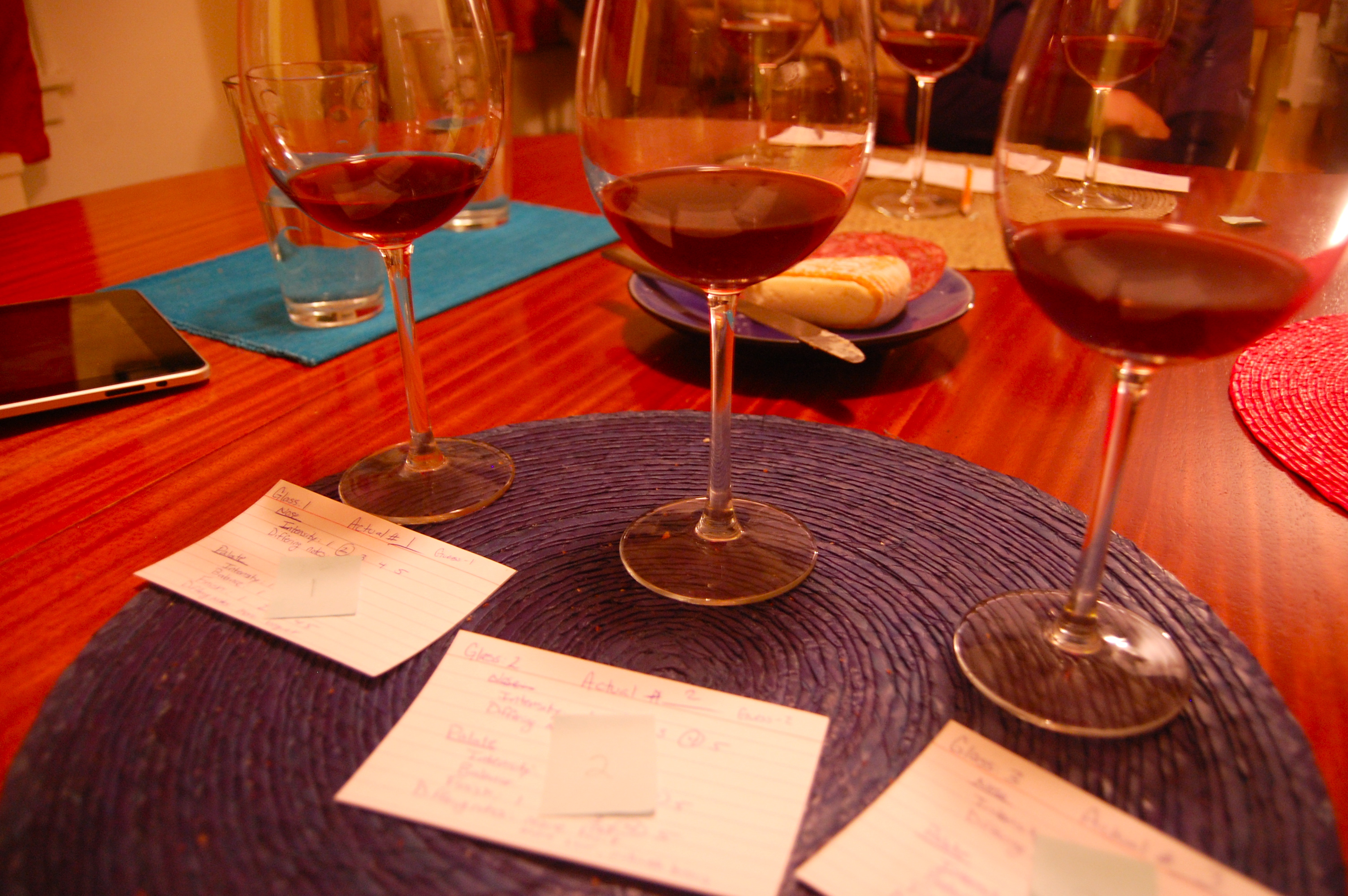
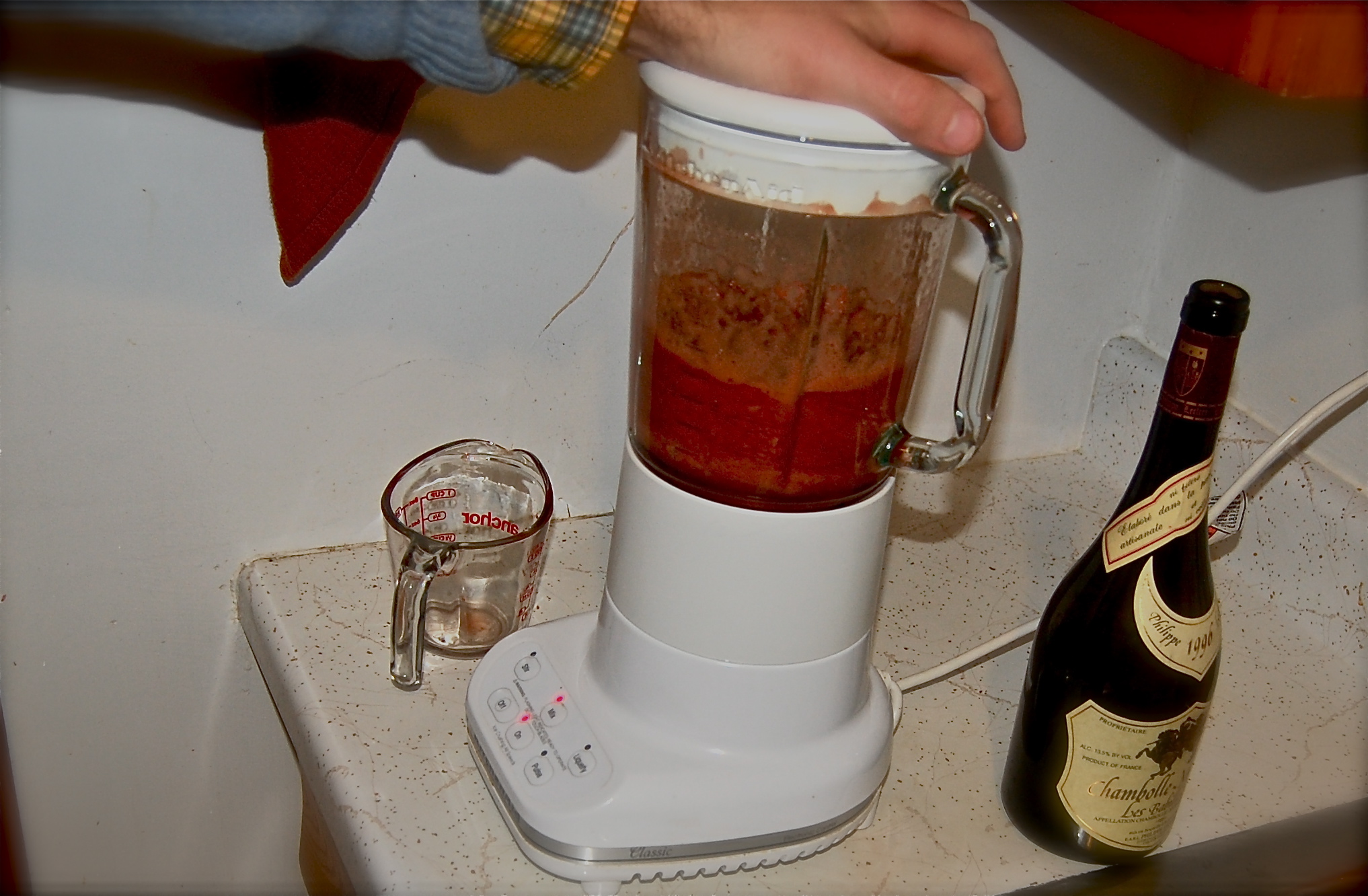
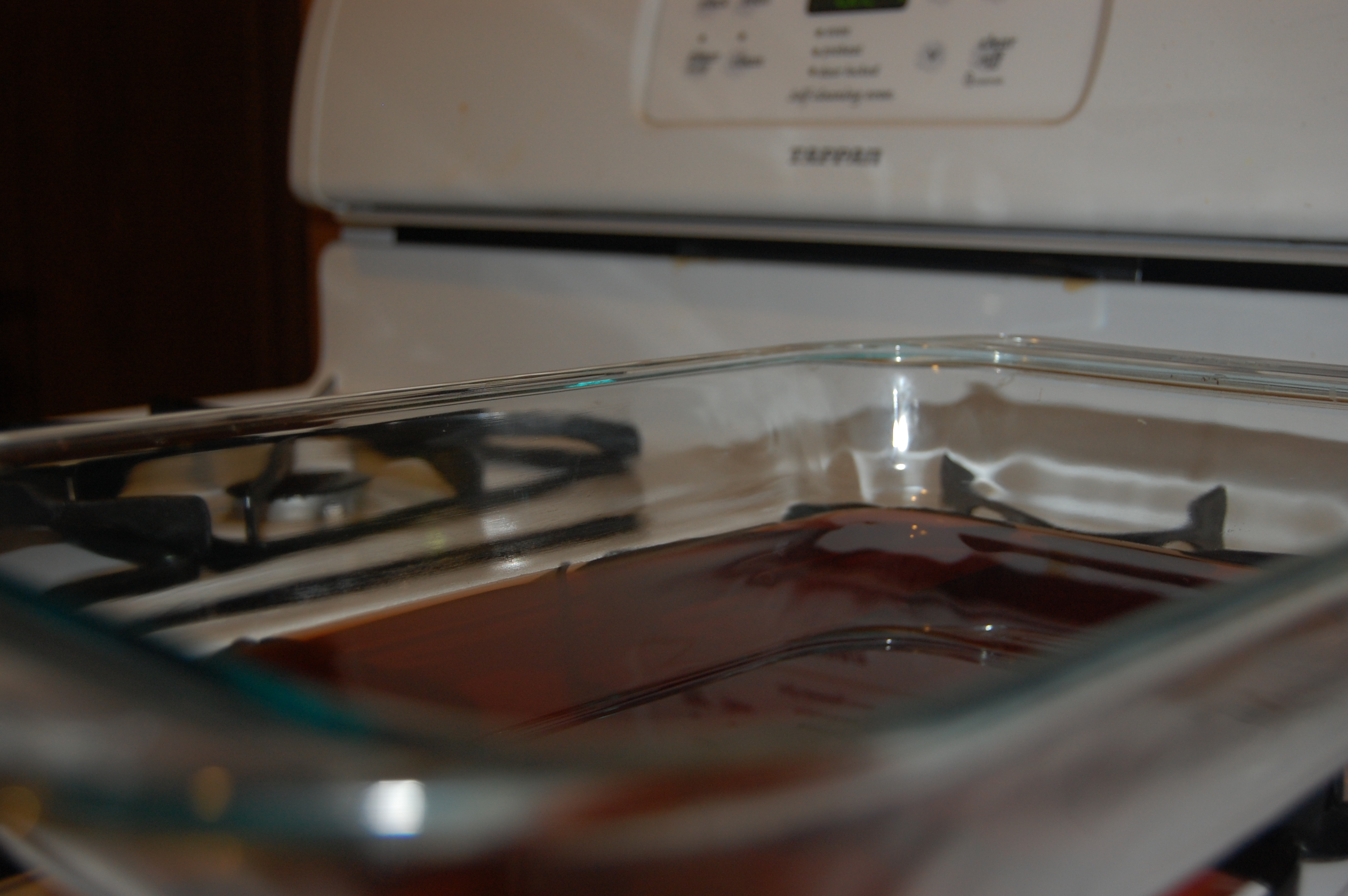
The methods:  Three different applications of oxygen to the wine were tested in this double-blind controlled study.  First, 250ml of the wine was poured into a measuring cup and then split between two wine glasses (the control of pouring directly from the bottle).  The second was 250ml of the wine poured into a measuring cup and then a 9″ x 11″ glass pan to expose as much of the surface of that wine to oxygen as possible. Third, 250ml of the wine was poured into the measuring cup and then a glass blender which was put on a low setting (such as “frappé”) for 30 seconds.

The pan

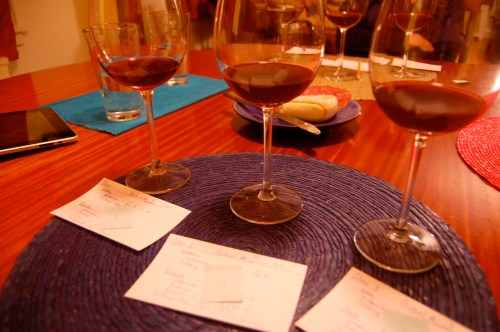
The second and third methods were then poured into respective glasses just as the first.  Each glass was labeled on the bottom (hidden) with the number of the method (1-3) for a total of 6 glasses, 2 for each method.  At this point I asked my paid assistant (paid in wine!) to leave the room and I rearranged the order of the glasses within each set.  After that, my assistant rearranged the glasses again while I stepped out so neither of us knew which order the wines were in, but we knew we each had one of each method.

Why the chosen methods?  Because I’m a huge nerd.  The first method acts as a control since it’s typically how people open and serve wine.  The added step of putting it into a glass measuring cup first was added to maintain consistency for the other methods.  Also, in the interest of consistency, if a glass was swirled, the other two glasses were swirled as well.  The second method is meant to mimic putting wine into a decanter.  I have two decanters, but by spreading the wine out on a flat surface as thinly as possible, the hypothesis that more oxygen on the wine increase aromatics is better tested.  The third method, the blender or Hyper-decanting as it is called, was popularized by Nathan Myhrvold the former Microsoft CTO that got bored one day and created a cookbook that focused on how to cook instead of what to cook (and it’s really cool).  The idea behind hyper-decanting is that it “chops” oxygen into the wine, moving oxygen through the wine instead of the normal lazy interaction oxygen has with the wine when it just sits there.  If you need a visualization, picture those movies that show an old school dance where the boys and girls sit on separate sides of the room and maybe one or two of them are dancing together.  That’s the normal wine and oxygen interaction.  Hyper-decanting is when the adult steps in a forces everyone to find a partner.  Also, the punch gets spiked.  Hijinks follow.

The rating:  This was a comparative analysis.  Therefore, each glass was analyzed briefly first and then a second analysis would be conducted and rated.  This ensured that if a glass was rated as having the highest level of intensity in the nose and the next glass was found to be more intense, chaos and anarchy would not ensue.  For the nose, Intensity was scored on a 1 – 5 scale with 5 being the most intense.  A Differing Notes commenting field was also included for more qualitative aspects.  For the palate, a 1-5 Intensity scale was also used along with a 1-3 Balance scale, a 1-5 Finish scale and a Differing Notes commented field as well.  In retrospect, the scales could have all been 1-3 since there were three glasses and this was comparative, but that didn’t affect the outcome and it did make the scorecards seem a lot more sciencey.

The results:  The assessments completed by my paid assistant and myself were nearly identical even though they were completed in silence.  The hypothesis that the more oxygen that gets added to the wine just before experiencing it was indeed correct, but with one twist.  The first method of direct pour produced a glass of wine where the experience was less intense and the characteristics of the wine tended to be more to the earthy spectrum while the fruits were more hidden.  The second method was more intense, but specifically with the fruit.  In this case, tart cherry came through and the tannins were more apparent.  The balance had gone a bit haywire.  The third method, which reigned supreme, boosted the intensity all around and the more earthy tones came back in to the picture to balance out the fruit.  The tannins then felt more appropriate and the finish appeared to linger just a bit longer which was most likely because of the improvement in balance and intensity.  As an added bonus, I guessed which glasses contained which methods correctly before the number labels were retrieved!

The conclusion: The wine that was tested was probably just past its prime (past the point of diminishing maturity).  Therefore, the results may change a little with the use of a young wine or an older wine in its prime, but I doubt the changes will be significant.  I can confidently state that forcing oxygen into the wine will noticeably improve the experience of a glass of wine.  However, it does appear that merely letting oxygen sit on top of the wine does not improve the experience and may even detract from it.  It may be related to headspace above the wine as Ron Jackson points out in his Wine Science textbook, pg. 503:

When the bottle is opened, aromatics in the headspace escape from the bottle.  The changed equilibrium between aromatics in the wine and the headspace induces further liberation of aromatics.  This phenomenon helps maintain the aroma in the glass during tasting, but may depauperate the fragrance of wine left in the bottle.  

If we arrange the methods in order of amount of headspace, it would be wine in the glass, wine in the blender and then wine in the pan.  It should be noted that a typical decanter does not have the same amount of headspace that wine in a pan does.  Perhaps, given the vast amount of headspace, the wine decanted into the pan went past its optimal point of maturity as was noted by the lack of bouquet or earthy tones to support the fruit tones.  Depauperate indeed.

Additional studies should be made (by me or at least invite me over if you’d like to do them) to compare all of those wine accessories and how well they actually affect the experience.  My guess is that you could get the better results from your blender than shelling out extra dough this holiday season for a fancy, single-purpose tool though.  Last, I do have to end this with addressing those who view wine as a fragile and ethereal object that should only be treated with kisses and caresses: Get over it.

Rating: 5/5

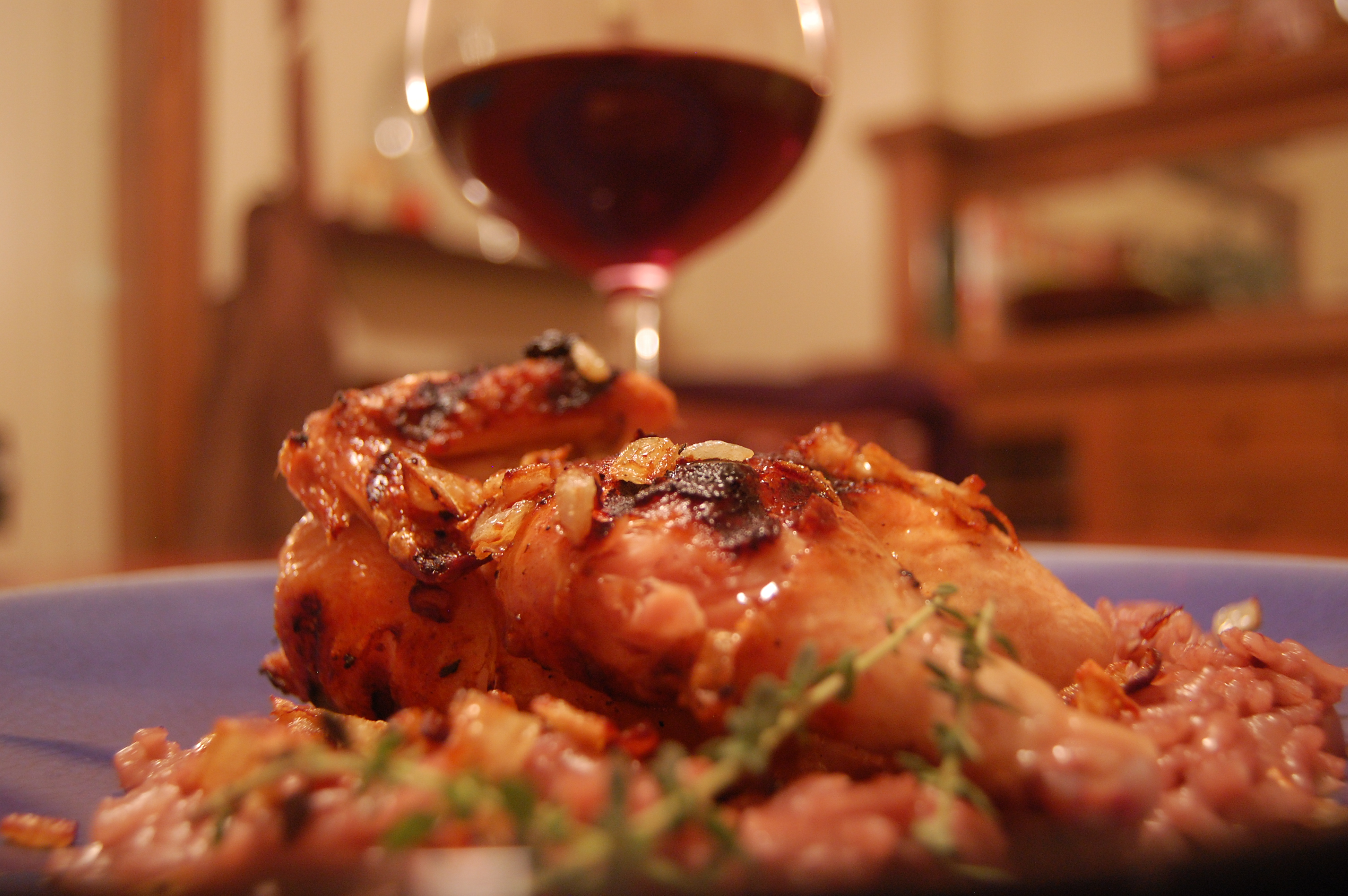
Cornish Hen marinated in olive oil, garlic and onion then put on the grill with a risotto full of tenderly cooked onions using a dash of the red wine instead of the traditional white.

Bonus gratuitous food shot

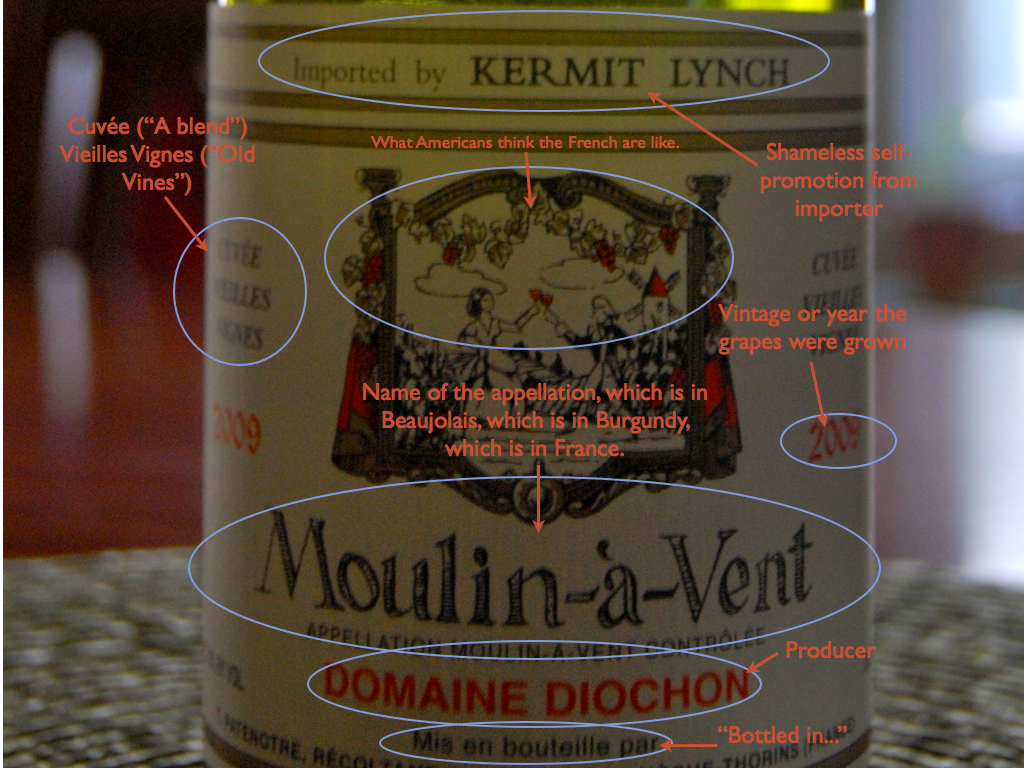
Wine: Domaine Diochon Cuvée Vielles Vignes 2009

Notes:

This was superb.  The gamay had a surprising amount of punch and had to be left out for an hour before I started in on it.  Lots of dark berries and fig components that went nicely with the creamy risotto and the grilled hen.  The tannins, although softly apparent on their own, seemed to melt away with the extra bit of finishing salt I dashed on at the end.  For those with concern about gamay, this is a serious one.  As a bonus, the dish turned out to be pretty good looking so I’ve included the gratuitous food shot above.  As a bonus to the bonus, I’ve even included a nice infographic of this label for those of you who want to figure out what exactly the items on a typical French label mean.

Bon appétit!

Interpreting a French Wine Label

Wine For Thanksgiving

-Norman Rockwell

Every year there are countless recommendations given out as to what wine you should be pairing with your Thanksgiving meal. These recommendations are always made with the utmost confidence that this exact wine will be the perfect match to whatever meal you have and no other wine would do. Everyone eats the exact same thing at Thanksgiving, right? The turkey, the gravy, the cranberry sauce, the stuffing; yours will taste the same as your neighbors, right? Except the pumpkin pie! Your mother makes the best pumpkin pie and everyone else’s tastes exactly the same, which is to say…not as good.  You know the scenario:

 You write down the the recommendations you found in the magazine, on-line, on the radio or on TV, while wondering if you’re spelling it right and whether that word is the producer, the type of wine or where it’s from.  Such joy you have knowing you will be bringing the perfect wines for Thanksgiving! The hunt is on! But once you get to the liquor store, the hunt proves fruitless. The store doesn’t carry those wines (assuming you wrote down the correct thing to begin with) because you live in such a small town that they don’t carry every wine in existence. Fooled again, world of wine!  You got me!  What to do? Panic? You start reaching for the boxed wine….

The idea that there are one or two wines that are a “superior” match to everyone’s Thanksgiving dinner is quite frankly ridiculous.  The problem with specific wine recommendations is that they only work for specific meals.  The specific interactions you get between the wine and food with the environment you’re in comprise the experience.  Thus, the whole point of my musings on this web log.  You have to keep in mind though that a good experience is comprised of a range of factors.  Can you have a good day when it’s raining? Yes.  Can you have a good day when it’s 67 degrees instead of 65? Yes.  Can you have a great Thanksgiving meal with a wide range of wines? Yes.

So instead of worrying yourself over whether or not you’ll be able to find the specific wines that were recommended to you, let’s give you a variety of options, shall we?  Just remember to look for the bottles that have a specific region listed on them.  First, let’s think of the flavor components of traditional Thanksgiving meals: savory, herbs, spices of nutmeg, cinnamon and cloves, creamy, buttery, jams, tart cranberries, the gamey-ness of the foul.  Now what wines can work well with that?

Whites:

  • Pinot Grigio
  • Chardonnay
  • Viognier
  • Tokaji
  • or some Bubbly!
I generally lean towards the medium to heavier bodied whites so they don’t get lost in all the heavy foods.  A little acid is nice and can provide some zip through the heaviness if you want to lighten it up.  The idea is to match up wines with more stone fruit components (pears, apples, apricots, etc.) which generally happen in cooler climates than ones that have more tropical flavors (mango, pineapple, kiwi) that generally happen in warmer climates.  So could you get a Sauvignon Blanc from the Loire Valley?  Yes, but I’d go with that more specifically if I were making a more herbaceous meal with lemon tones.  If you like your buttery chardonnay, it’ll go great with those buttery biscuits and mashed potatoes.  If you generally like buttery chardonnays, but feel like they are at the top of your butteriness threshold, go with a viognier.

Reds:

  • First pickings from the newly released Beaujolais Nouveaus (Gamay)
  • Grenache or  Grenache/Syrah blends
  • Pinot Noir
  • Zinfandel
  • Cabernet Franc

With the reds, the idea is not to get too far into the heavy body realm or too far into the big tannin realm.  The amounts of vinegar and salt in most Thanksgiving meals can typically match the bitterness in the tannins of the above varietals and blends.  The idea with the reds is to match up the red-fruit-jammy and herbaceous flavors while keeping an eye on the tannins.  For some, lots of tannins aren’t a big deal and they kind of like it.  But if you’re having a large number of people over, there are high chances that not everyone is like this.  So if you do want to try a more tannic red, just make sure those who don’t enjoy that sort of thing have a chance to get more vinegar, citric acid or salt in their mouths before they take a quaff.  If your fruits are swaying more to the darker end (blackberries, plums) then you can switch over to the medium-bodied dark fruit wines like Merlot, Syrah, Monastrell, etc.

Just remember, if you really like a couple wines, chances are that those can work for the “perfect” Thanksgiving meal.  You might have to make some small adjustments to your menu, but everything should work out fine.  Those of us who enjoy wine have an expectation bar at some level and as long as it meets that or surpasses it, we’re good.  We don’t fret over prefect pairings, especially if we aren’t doing the cooking or bringing the wine.  If you do have someone who you know has the highest expectation bar, go ahead and tell them to bring the wine.

Lasagna and Ripasso

Rating: 4/5

Lasagna layered with homemade pasta noodles, sauce composed of browned ground turkey in tomatoes, onion, garlic, yellow pepper, basil, rosemary, caraway seeds, and salt/pepper, fresh spinach leaves and a cheese blend of ricotta, asiago and parmesan.

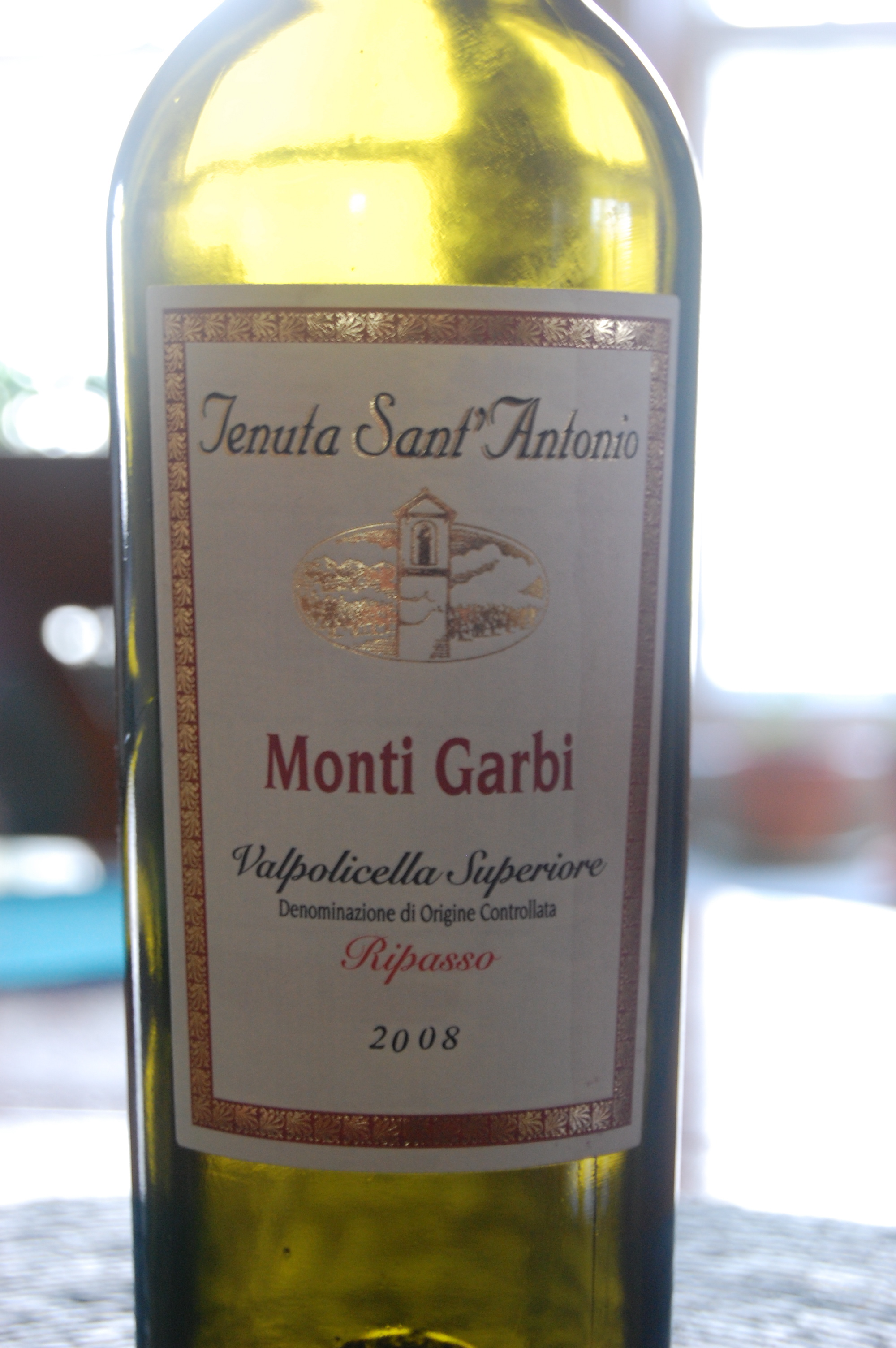
Wine: Tenuta Sant’Antonio “Mont Garbi” Ripasso

Notes:

Valpolicella is generally known for two types of wine.  One is their standard blend of Corvina Veronese, Rondinella and Molinara which is a lighter, aromatic wine and generally flies under the radar of enthusiasts.  The other is Amarone, which is made from the same grapes, but the grapes are dried ahead of time and then fermented into a rich and dry wine.  Amarone is the popular kid out of Valpolicella and its price tag generally reflects this.  However, at some point, a very enterprising wine maker decided to take the leftovers from Amarone and blend them with some of the standard blend to create a middle of the road wine which turned out to be pretty good.  They called it Ripasso and it officially got recognized in December 2009 with a DOCG status (which means they could put the word “Ripasso” on a bottle and it would mean something).

Anyway, this paired nicely with the lighter lasagna.  The wine delivers all sorts of red fruits upfront, but has enough structure and spice in the end to make it play wonderfully with the ricotta cheese and the caraway.  Simply Italian.  Enough said.

How Deep Do You Go?

I have been in countless debates over the years with people about which alcoholic beverage is superior to the others in terms of depth of a subject. Usually, it centers around wine, beer and some or all form(s) of whiskey. I can bet that you know which side I was debating on.

In reality, as aptly put in the comic above by Randall Munroe, if someone is curious enough and has the proper nerdy/geeky sensibilities, you can dive to bottomless depths of any topic (even “Blog Post Title Names That Sound Like Innuendos” if you so choose).  For me, I tend to start down the path of curiosity of anything that catches my eye, but I seem to go the deepest with wine.   I really, really like to know how things work.

In wine, the trick to going deeper and weeding through all of the B.S. out there is wrapped up in the question: Why?  If you can’t get a scientific answer as to why x causes y then you should feel free to remain skeptical.  However, if you don’t pursue that answer to your question you either don’t care that much about the answer or are content in believing that someone is wrong without knowing in what way.  Either of those options is a bit shallow if you ask me.  The wine world needs more people asking why and then finding out answers when they aren’t content with the ones they are given.

I could give you a million reasons why the topic of wine is worth the distance and I’ll give them too if you ask me, but the fact that you’re reading this is evidence that you’ve already found some of your own.  All I ask is that you figure out what it is about wine that piques your curiosity and then start asking: Why?  Wine, as a subject, is rather complicated and anyone who tells you otherwise is selling something.  Is it ok to drink really cheap, mass-produced wines? Sure, if you like them, but some of us might equate that to you limiting yourself to the nursery rhymes you grew up with instead of giving the rest of the music scene a chance.  Once you learn more about a topic, your reasons why you like whatever it is tend to change; you start to appreciate the quality of certain aspects of your subject.  One only becomes snobbish about a topic when they cannot demonstrate why one example is superior to another and in what capacity.  A snobbish persons also refuses to consider a person’s preferences into their demonstration.

Don’t think I won’t continue rallying for the side of wine in the “Which has more depth to it?” debate.  I will and I’ll win, because debates aren’t necessarily about who is actually right anyway.  But for the sake of debate, for the sake of others listening to your conversations and most importantly, for the sake of yourself, don’t be content with just knowing you like something.  Please ask: Why?

Rating: 5/5

Chickpeas and chopped dried dates put into a masala (a mixture of spices) created from tomato paste, garlic, cardamom, star anise, yellow onion, cumin and cayenne pepper.

Wine: Yalumba Shiraz/Viognier 2008

Notes:

Yowzah!! This was fun.  If you ever have a night where all you feel like doing is wrapping yourself up in a blanket and listening to the cold winds whipping around outside, this is your meal. As a bonus (for some; not me), it’s vegetarian and vegan friendly if you’re in to that sort of thing.  The cayenne actually plays an interesting role in this dish in the fact that if you just put a dash, it acts as a supporter to the warmth in the spice blend.  If you put in more than a dash, the rest of the spice blend acts as a warm supporter to the heat “pricks” of the cayenne.  I went with the former which paired beautifully with the wine from Eden Valley, Australia.  Now, to avoid some confusion, there was only 3% Viognier in this bottle so it’s hard to really call this a blend (but this is how they do it in Côte-Rôtie, France!).  Yalumba could have legally said the whole thing was Shiraz and that would have been fine.  Most of the world states that if you have at least 85% of a varietal in a bottle you can just call it by that varietal.  However, I always appreciate a vintner’s honesty when they go the extra mile and tell me what the exact blend is.  The best part about this pairing was how even though the fruit tones were muted because there was nothing in the food to enhance them, the wine still was incredibly balanced and took on a darker life that was very interesting and enjoyable.  It also helped greatly that the finish on this wine lasted as long as the warmth from the spice blend did.

In my Sushi and Wine Part 1 post, I did a survey of the existing help a person may find browsing the internet on pairing wine with sushi.  The results were not good.  It turned out that given the number of conflicting views that existed, people should just give up and drink sake (or a gin martini!) instead of attempting to drink wine with their sushi.  While disheartening for wine lovers who also eat sushi, I would not be deterred.  Sushi, after all is just food and there is a science behind how wine interacts with food.  Let’s break it down!

<Insert upbeat transition music>

Basic food components of (Americanized) sushi: raw fish (tuna, salmon, snapper, etc.), rice prepared with rice vinegar and sugar, soy sauce, pickled ginger and wasabi (although a lot of times it’s just a colored horseradish and mustard mixture).

Additional food components in rolls: carrots, cucumbers, mango, sprouts, mayonnaise (sometimes “spicy”), cream cheese, crab (fake or not), nori (the seaweed wrap) and tempura (batter of mostly wheat flour that things can be fried in).

This is by no means an exhaustive list, but it is pretty comprehensive if you consider the vast majority of sushi consumed here in America.  One thing to notice here is that even though sushi and wine pairing is kind of an unsettled thing, the taste components of sushi don’t differ from any other foods.  You still perceive the primary tastes* sweetness, saltiness, bitterness, sourness and umami from sushi, just as you would any other meal.  Theoretically then, sushi shouldn’t be treated any differently than if you were considering a wine for another type of meal.  So where is the disconnect?  Does the dunking of the sushi into a vat of soy sauce (umami and saltiness) really “kill” a wine.

In researching how sushi and wine can interact with each other, I decided I needed to know a little bit more about the science of taste.  The journey ended up leading me to the one and only, Tim Hanni, MW.  Tim is known, amongst other things, for two firsts: Being one of the first two resident Americans to receive a Master of Wine title and for being the first to introduce the flavor component, umami into the wine and food community lexicon.  The latter has given him the tongue-in-cheek (almost literally) title as The Swami of Umami.  Visit his website through the link for a whole host of interesting materials.

“There are actual differences in how people experience some sensations. It’s not that one person has a better or worse palate than another.”  Tim stated, referring to the idea in the wine world that one has to “mature” their palate to truly appreciate the best wine and food pairings.  In his teachings, we all fall somewhere on a scale of how sensitive a taster we are.  The highly sensitive tasters can notice interactions to a high degree while a more tolerant taster might not even notice it at all.  An example he gives is experiencing a wine with a high alcohol level.  A more sensitive taster will experience almost a burning sensation which can be heightened if paired with a sweet or umami-laden food.  The tolerant taster, on the other hand could find the sensation to be almost sweet instead of a burn and not mind the food/wine combination at all.

More specifically, about sushi, I asked him about the claim that soy sauce “kills” wine.  “I hate that. Most people don’t actually pay attention to what is happening in their mouth and the ones who should (writers, bloggers, “experts”) often pay the least attention – they write about wine and food interactions that they have never taken the time to isolate and experience. Do you have a bottle of red open yet today?”  I didn’t.  I’d just gotten done with a 3-hour bike ride and was still in full gear, sans helmet.  “Ok, well I have this bottle of red here that I’ve been working on today and…it’s ok, it’s not that good.”  Tim is very much a hands-on kind of educator. “And I have a little bit of this soy sauce…then the wine…and this wine actually tastes better with the soy sauce.”  So no, wine isn’t “killed” by soy sauce.  What does happen, is that the perception of tannin in the red wine noticeably diminishes due to the salt in the soy sauce.  Therefore, someone expecting the astringency (and also considering the presence of those tannins the mark of what the wine should taste like in the case of many wine professionals) might consider it a bad pairing while someone who doesn’t particularly enjoy that sort of cottony-feeling in their mouth might consider it a good pairing.  Tim, had just answered the question as to why there was no consensus in the on-line world as to what wines were good with sushi and what wines were not.  It’s all about perception.

<Insert dramatic transition music>

Therefore, pairing wine and sushi (or to any dish really) is not so much about finding the perfect wine that everyone agrees on, but discussing the sensations that are possible and letting someone figure out which ones they like. The experience of flavor matching, on the other hand; the concept of hooking up a similar aroma or flavor from a wine to one that is found in the food, will probably be consistent across the board, but one would need to decide if they want to up-play or down-play that flavor.

Now for the theoretical part.  Through my research so far, I’ve come up with 4 interactions that generally make up and affect the wine and sushi experience.  Just 4, you say? Yes! Just 4!  These 4 guidelines will assist people in choosing the wine and sushi pairings that work for them.  If you’d like, you can play around with these interactions as you eagerly await the exciting conclusion of my sushi and wine research.  Part 3 will involve experiments, charts, more science and as promised, a guide to show you what to order at your favorite sushi restaurant based on what kind of experience you want to have.

The 4:

  • When a flavor component of the food is similar to that in the wine, the experience of that flavor is enhanced.  This is called flavor matching.
  • The perception of alcohol will increase when paired with sweet, umami-tasting or spicy foods.
  • The perception of spiciness will decrease when paired to a wine with more acidity.
  • Tannins will noticeably diminish when they encounter salt (soy sauce), citric acid (lemon juice) or vinegar (pickled ginger).

*More and more research is showing that taste takes on a hierarchical form with the primary tastes on top and their variations underneath.  At least 5 different types of bitterness have already been sussed out and there is little doubt that more will be found including sub-types to those sub-types and perhaps more tastes than the 5 general tastes already labeled!

Read on to the exciting finale: Sushi and Wine Part 3!

Rating: 5/5

Ground beef burger with cumin, corriander, sage, soy sauce and tobasco mixed in.  Refried black beans between the bottom toasted wheat bun and the burger topped with aged cheddar, mashed avocado and chopped serrano pepper mixed together, garlic aioli, then a tomato slice followed by the top bun.  Side of waldorf salad (lettuce, grapes, walnuts, celery, yogurt and lemon juice dressing).

Wine: LAN Crianza Rioja 2006

Notes:

This was a fantastic burger!  Perfect at the end of the summer in the heat and perfect after a good bike ride (I crave burgers after the end of a nice ride for some reason…everytime).  I was a little hesitant that the alcohol was going to intensify the spice a bit too much, but fortunately the wine turned out to be more balanced than I thought and I only noticed it a little in fleeting moments.  Those fleeting moments were certainly inconsequential as it took awhile to finish the 1/2lb of beef on this burger.  Other than that, you can’t go wrong pairing something with southwestern stylings to tempranillo.  As a somewhat embarrassing aside, I typically envision riding a horse through the coastal plains of Spain as I sip on this gem from España.  If I could personify one wine, it would be tempranillo and tempranillo would be a cowboy or a caballero.  Sure, go on and giggle now, but you’ll be cursing me the next time you take a sip from Rioja in particular and all you can think about is being a cowboy (or cowgirl).

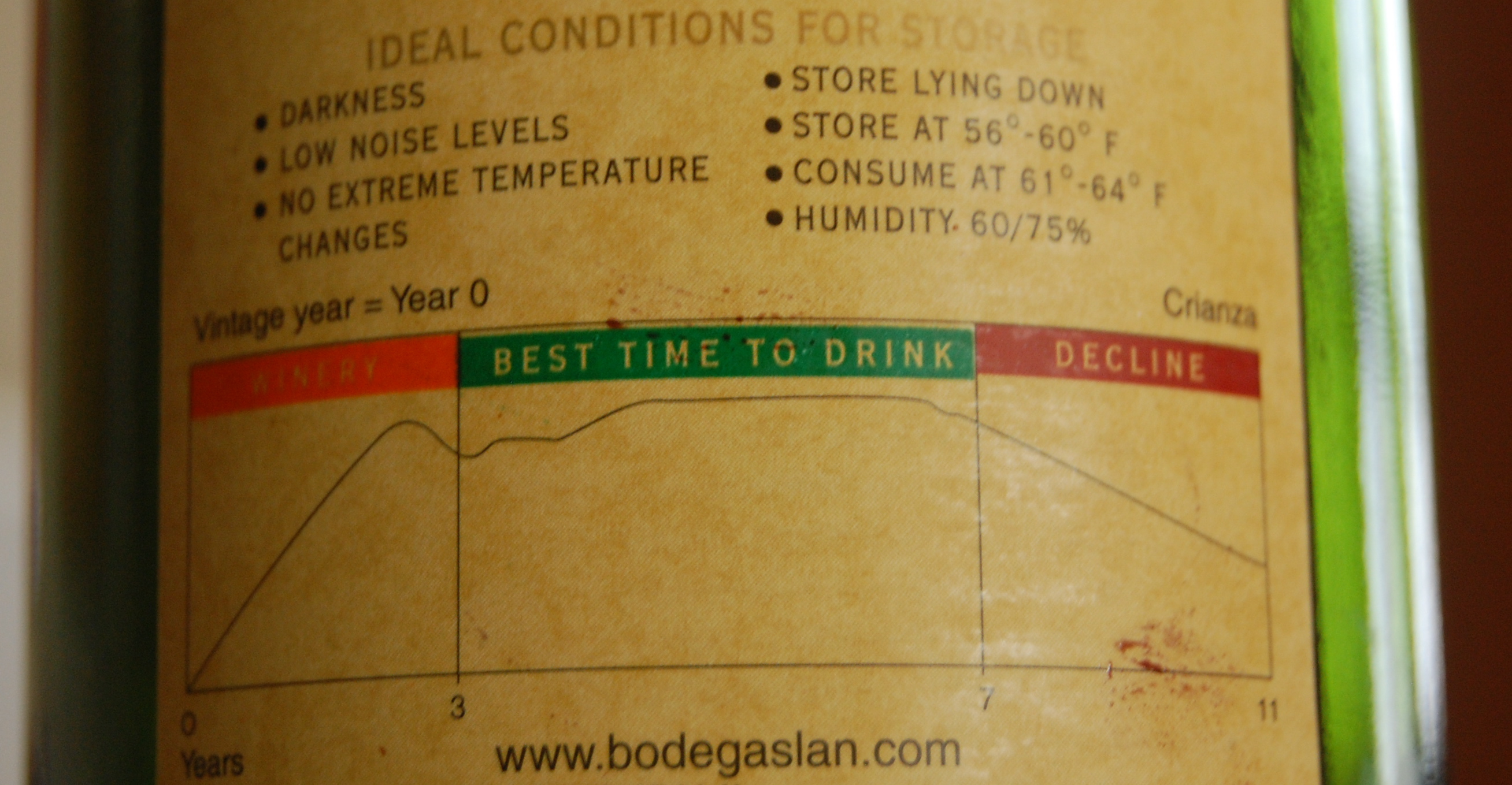
Additionally, this bottle from LAN was sporting a spiffy rear label. 

Not only do they give some good cellaring tips (as if you weren’t going to drink this right away), but they also give a cool chart to show you when the “Best Time To Drink” this wine is and I’m a sucker for a good chart.  The Spanish, especially those in Rioja are typically very good at only releasing wines when they are ready to drink so their wines usually don’t need to be cellared for extended periods of time after you purchase it unlike the Bordeaux and Burgundies of years past.  For the LAN Crianza, they had a suggested drinking time from 2009 to 2013 (3 to 7 years from the vintage date) which seemed like an adequate assessment.   How they came up with the exact shape of the graph is beyond me, but I suspect their graphic designer had to get a bit creative.

Exciting News For Twin Cities Folk!!

The Aaron Berdofe Wine and Food Experience is coming to the Kitchen Window in Uptown.  I will be leading two classes this fall in their super fantastic kitchen they have on the upper level in Calhoun Square.  It sounds like space for these fills up quickly so click the links below and get registered!

September 9, 6pm-9:30pm:   Big 6 Wine Basics Dinner

Thursday, October 13, 6pm-9:30pm: Syrah/Shiraz Wine Dinner

Can’t make it? Contact me about private events for you and your friends.