 Readers of this blog will note that I adhere to a strict non-point-scale-giving, non-arbitrary-ranking-system policy. There is a simple reason for this: No regular person drinking wine is going to have an experience epiphany while manually tallying up observational points. Who gives a shit? I will point out the things that stand out in the experience of a wine though to help people find the words to describe what made it enjoyable or not. However, wine critiquing is something that needs to exist for any crafted product to help set prices and to establish an inherent and generalizable definition of value in the industry.
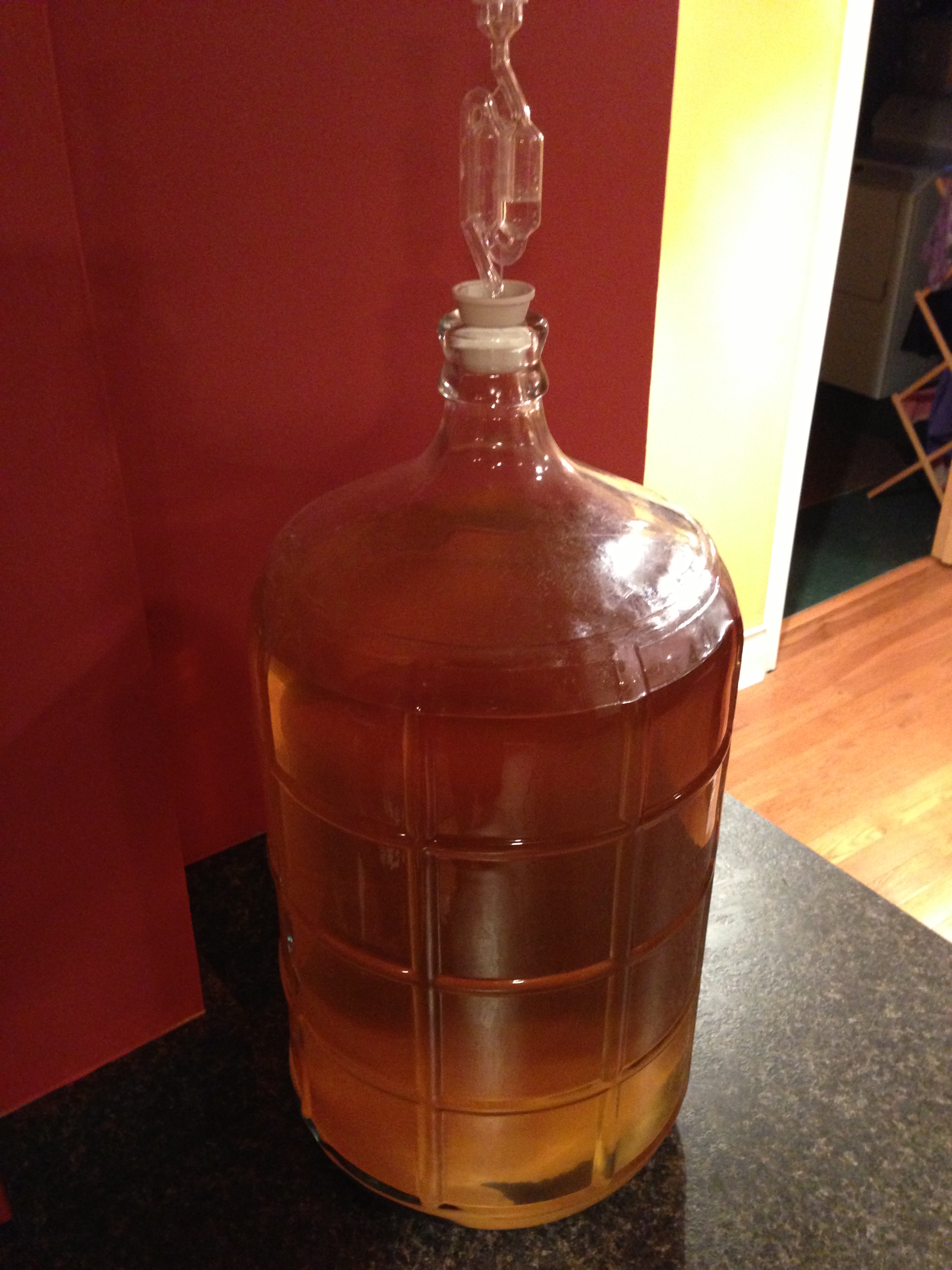
Therefore, I would be doing you, the reader, a disservice if I didn’t actually know how to critique wine. Fortunately for me (and you), I do. I follow a close version to what is taught in the International Sommelier Guild which is where I received some of my training. In order to demonstrate the steps for reviewing wine, I will be using the Gewürztraminer that I made the other month which is now strangely disappearing quickly every time friends and family are around.
Appearance
- Clarity: Is the wine free of cloudiness, crystals, or other floaty things that you’d rather not see in there? This is relating to how well the wine was filtered and fined. However, it should be noted that the appearance of crystals (a result of a slip-up in cold stabilization) doesn’t affect the taste or smell. It should also be noted that some red wines are in fact, unfiltered. When tannin starts to bind and fall in the wine over time, it settles to the bottom. This is not a fault. Decanting will take care of this if you don’t like to have debris at the bottom of your glass, but some of us like this guy, do.
- Color: What color is the wine? You’ll find “yellow” or “red” doesn’t cut it with the professional crowd or color freaks. You have to say some shade of “Straw” to gold for a white generally and a variation on ruby or garnet for reds. Really you’re just trying to determine if the wine is the correct shade of color for the varietal. If it’s brown, then something is wrong.
- Color depth and brilliance: How deep is the shade of color and how much does it shine? Most wine critiques prefer wines that are rich in color and have a certain shiny characteristic (not unlike dog toys). If you process a wine too much while fining and filtering, you’ll probably take away some of the luster. The depth or purity of the color is really a preference though. Some claim it’s an indicator of overall grape quality, but that’s not commonly recognized.
- Color pooling: How much does the color of the wine pool to the center? or is there a pale rim of color around the edge where the wine meets the glass? This is an indicator of wine maturity (not necessarily age). It’s not that the more color pools to the center, the better the wine is, it is more of an indicator as to how far along a wine is in its life.
Appearance of my wine: Clear, deep in pale straw color, no pooling.
Nose

I have a big nose. I get it.
- Health: Does the wine smell healthy? If the wine smells funky then there’s probably something wrong with it. This could be a bacterial infestation (Mmmmm), general hygiene problems (usually also relating to bacteria), or way too much sulphur (smelling like farts).
- Intensity: How much do you have to work to smell the wine? I range this between getting knocked over the head with smell down to needing to dig your nose in the glass to get the faintest whiff. A lot of critiques seem to like to be hit over the head.
- Aroma/bouquet: What are you smelling? There is a lot of debate between the difference of aroma and bouquet so you’ll see them used interchangeably. The best definition I have heard is that aromas are the compounds that are inherent in the grapes and bouquet are the compounds that come about during the wine making process. So if you don’t know what the difference is this one might take a little work, but I can guarantee you that most critiques don’t know either. The easy way out is just to list what you smell. Then you verify that the wine you are smelling smells like what it is. For example, a common Chardonnay aroma from cooler climate areas is Green Apple. Does your Chardonnay have a Green Apple smell to it? It should also be noted that humans can only distinguish between 4 different aromatic compounds at a time. If someone is telling you more, you can call BS.
Nose of my wine: Healthy, mild intensity, aromas of peaches and lemons.
Palate
Marginally unrelated image.
- Sweetness: How much residual sugar is residing in the wine? This ranges from sweet down to dry (with an addition of “brut” for sparklers). Despite what most think, the vast majority of wine produced resides in the dry and off-dry category. The measure of actual sugar in the wine should not be confused with the perception of sweetness that is mostly caused by…
- Acidity: How much saliva rushes into your mouth after sipping the wine? If you ever hear someone call a wine “flabby”, they are stating that the acid of the wine is much too low to balance out the wine. As a general rule, the colder the climate, the more acid is in a wine. Therefore, if you like high acid Rieslings, don’t expect to like one from central California.
- Viscosity: How heavy does the wine feel in your mouth? Is it vapid and wraith-like or does it have the characteristics of an iron fist wrapped in sweet sweet velvet? You’ll see this referred to as “Body” a lot, but I find that term is a bit vague for my taste.

Plus we aren’t supposed to sexualize wine descriptions anymore. STAY BACK SEXY PURPLE-ISH PINK WOMAN!!
- Alcohol: How much alcohol is in the wine? Yes, trained tasters can identify the alcohol content of a wine just by tasting it; usually within 0.5%. Try me.
- Sound wave: I’m pretty sure no one else does this, but I can feel how the wine floats through my mouth and visualize it like the shape of a sound wave. Does it peak early and fizzle out? Does it crescendo into infinity? I love this description because I think if every bottle of wine only showed the sound wave and maybe a few aroma descriptors, wine buyers would have zero risk in picking up a wine and knowing if they liked it or not.
- Tannin: That cotton-wrapped feeling your tongue endures when drinking some red wines, coffee, or tea. Tannins bind to your saliva proteins which causes the dry feeling. Anything aged in oak will have tannin and anything which stays in contact with the grape solids for a while (reds) will some degree of tannin as well. The amount of tannin should be appropriate for the varietal and the style. The heavier the red, the more tannin it generally has. The longer it is supposed to have been in oak, the more tannin is imparted into the wine as well.
- Flavors: Similar to the aroma/bouquet of the nose. Do they also appear on your tongue or are they different. Same reasoning too.
- Complexity: How much depth does the wine have? Or how long does it make you think about what’s in it?
- Balance: Do all of these factors balance together or does one stick out to some degree? Just in case there was any doubt: A balanced wine is a better wine.
- Finish: After you swallow or spit (which is acceptable when tasting, but for some reason the ladies seem to think that’s hilarious) how long does the wine linger with you? Does it quickly dissipate or does it stick around? The length of finish can generally be tied to the level of quality of the wine.
Palate of my wine: Off-dry, with fresh-acidity, silky viscosity, around 12% alcohol, a sound wave with an even fade-in and fade-out reaching a moderate height, fairly simple in complexity, but well balance and a lingering finish.
So all-in-all my wine turned out to be pretty decent considering I was expecting it to taste no better than something that came out of jug. If I were going to put this wine out on the market, I could probably get $12-13 for a bottle at retail. Not bad for a first attempt.

 Aaron Berdofe's Wine and Food Experience